
How Much Does a Large Custom Live Edge Walnut Table Cost?
One of the most common questions I receive from clients considering a custom table is simple:
How much does a large live edge walnut table cost?
The answer depends on considerably more than length.
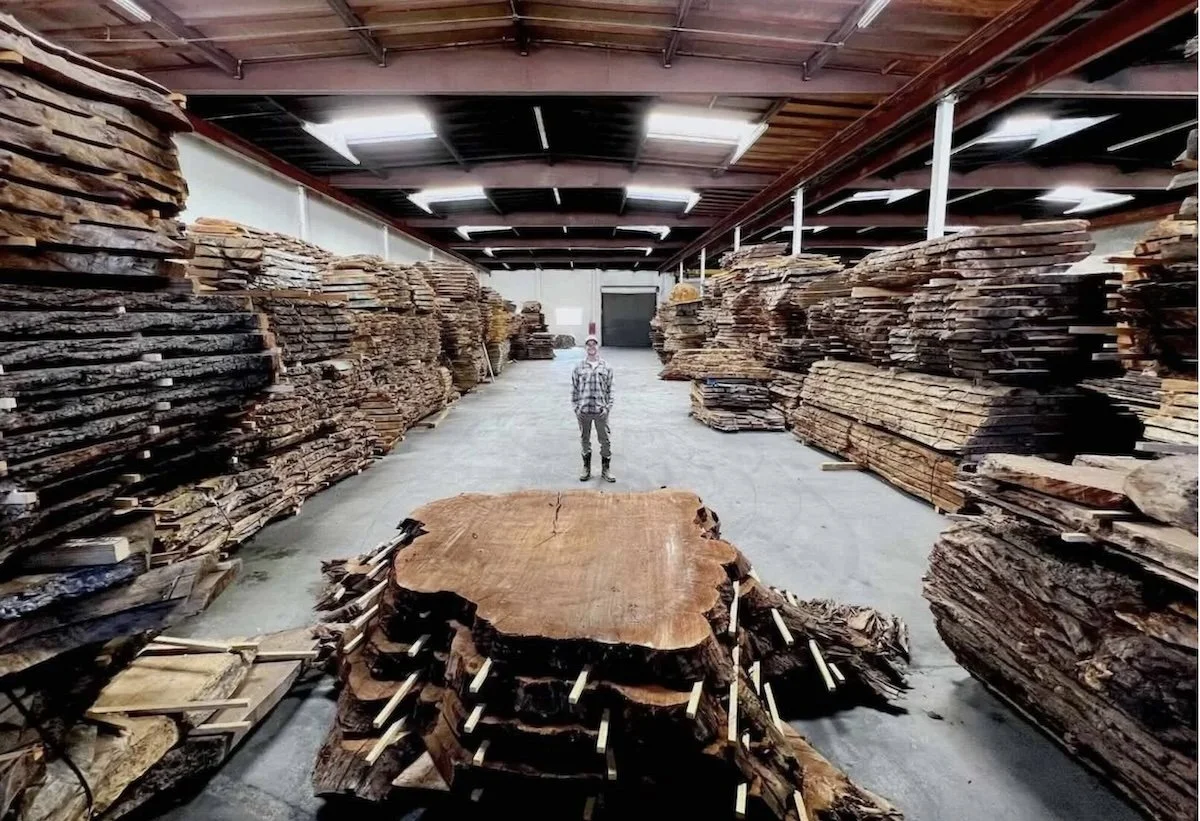
An eight-foot dining table made from a relatively common walnut slab is a very different project from a 14-, 16- or 20-foot table built from an exceptionally rare piece of Claro or Bastogne walnut.
At larger dimensions, the material itself can become the most significant part of the investment.
At Kristopher Kirkpatrick Custom Furniture, I specialize in building large and extra-large custom live edge dining and conference tables from premium hardwood slabs, particularly Claro walnut and Bastogne walnut.
From my workshop in Valley Center, California, I work with clients throughout Southern California and nationwide.
Here's what determines the cost of a large custom live edge table—and what I recommend considering before commissioning one.
1. The Wood Slab Is Often the Biggest Factor
The foundation of an exceptional table is the material.
Not all walnut slabs are created equal.
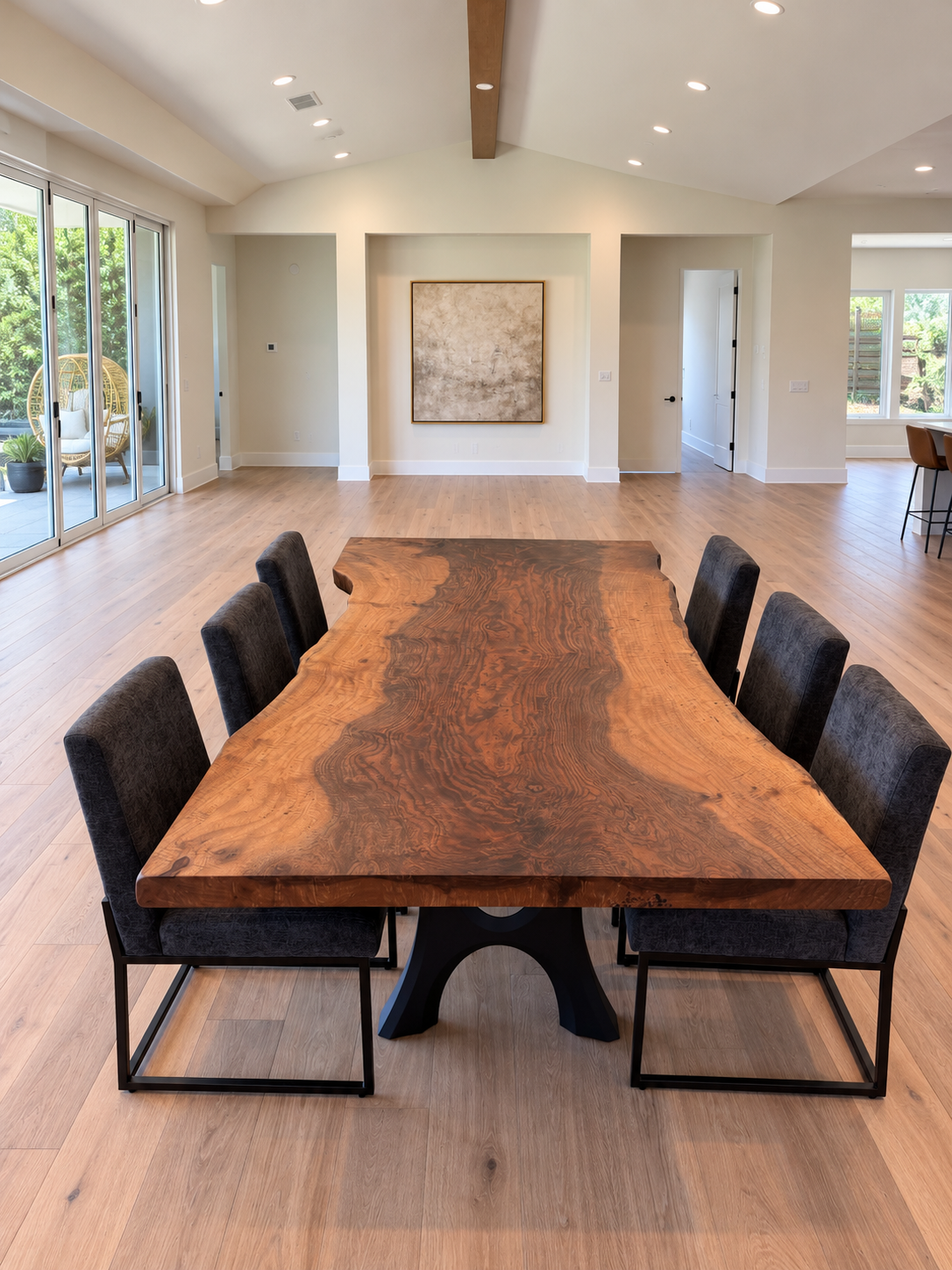
Two slabs of the same species and dimensions can have dramatically different values depending on their figure, color, natural character, condition and rarity.
An ordinary walnut slab may have relatively straight grain and consistent coloration.
An exceptional Claro walnut slab may display dramatic curl, crotch figure, contrasting colors and extraordinary grain movement.
These characteristics cannot simply be manufactured or duplicated.
For clients looking for a truly one-of-a-kind table, the individual slab is often what makes the finished piece special.
Why Extra-Large Slabs Cost More
As dimensions increase, suitable material becomes substantially more difficult to find.
Finding an attractive eight-foot slab is one thing.
Finding a 16-foot slab that is exceptionally wide, properly dried, structurally suitable and visually extraordinary is an entirely different challenge.
Very large trees capable of producing material at these dimensions are uncommon.
The slabs also require specialized milling, drying, storage and handling long before they become furniture.
For this reason, the price of an oversized walnut table does not necessarily increase in a straight line with its length.
An exceptionally rare slab can command a significant premium over more readily available material.
2. Claro Walnut vs. Bastogne Walnut Pricing
Claro walnut and Bastogne walnut are two of my favorite materials for premium custom tables.
Both can produce extraordinary furniture, but their appearance and availability vary considerably.
Claro Walnut
Claro walnut is prized for its rich brown coloration, natural character and dramatic figure.
Exceptional pieces may contain curl, contrasting grain patterns and striking color variation.
For clients who want a table that becomes the centerpiece of a room, premium Claro walnut is difficult to beat.
Bastogne Walnut
Bastogne walnut can offer equally remarkable visual character, including rich coloration and dramatic grain.
Certain slabs are particularly desirable because of their unusual figure, dimensions and natural contrast.
Neither species is automatically more expensive in every situation.
The individual slab matters more than the species name alone.
A highly figured, exceptionally large Claro walnut slab may be considerably more valuable than a smaller Bastogne slab—or the reverse may be true.
3. Single-Slab vs. Multi-Slab Construction
Another important pricing factor is whether the table will be made from one continuous slab or multiple pieces.
A single-slab live edge table preserves the uninterrupted grain of one section of a tree.
For large dining tables, this can create an extraordinary appearance.
However, finding a single slab with sufficient length and width becomes increasingly difficult as dimensions increase.
A multi-slab or bookmatched table can provide additional flexibility.
Depending on the material, combining carefully selected slabs may allow us to achieve the desired dimensions without requiring one exceptionally rare piece.
That doesn't mean a multi-slab table is necessarily inexpensive or less desirable.
Beautiful bookmatched slabs can be exceptionally valuable in their own right.
The best choice depends on the design, available material and desired appearance.
4. How Table Dimensions Affect Cost
Length gets most of the attention when discussing large tables, but width and thickness are equally important.
A 12-foot table that is 36 inches wide requires substantially less wood than a 12-foot table that is 60 inches wide.
Thickness also affects material requirements, finished weight and the equipment needed for fabrication.
For large residential and commercial projects, I consider:
Finished length and width
Slab thickness
Seating requirements
Natural edge configuration
Structural support
Overall weight
Access to the installation location
A table should be proportioned to the room rather than made larger simply because an enormous slab is available.
For many clients, a beautifully proportioned 10- or 12-foot table is a better investment than a 16-foot table that overwhelms the space.
5. The Base Design Affects the Final Price
A table base isn't simply a decorative component.
It needs to support the weight of the tabletop, provide stability and allow for the natural seasonal movement of solid wood.
For many contemporary tables, a properly designed steel base is an excellent choice.
Other projects may call for substantial wood bases or completely custom fabrication.
With extra-large tables, base engineering becomes especially important.
A 16- or 20-foot tabletop can weigh hundreds of pounds, and the supports must be positioned carefully to maintain stability without interfering with seating.
The complexity, materials and fabrication requirements of the base all affect the final cost.
6. Cracks, Voids and Stabilization
Natural wood is not a manufactured material.
Large slabs often contain cracks, voids, knots, bark inclusions and other characteristics that must be evaluated before construction.
Some of these features contribute to the beauty of the finished table.
Others require stabilization, resin work or additional fabrication.
An extraordinary slab with complex natural characteristics may require considerably more labor than a relatively straightforward piece of wood.
This is one reason two tables of identical dimensions can have very different construction costs.
Every slab requires an individual approach.
7. Finishing and Craftsmanship
Turning an enormous piece of wood into a refined dining table involves far more than flattening the surface and attaching a base.
The slab must be evaluated, surfaced, shaped, stabilized where necessary, sanded and finished.
Natural edges need to be cleaned and refined without removing the character that makes them special.
For many of my projects, I use Rubio Monocoat, a hardwax oil finish that allows the natural appearance and texture of the wood to remain central to the design.
The goal is to create a surface that is beautiful, practical and maintainable over time.
With large tables, these steps become more demanding simply because of the amount of material involved.
Proper craftsmanship takes time, and that labor is an important part of the finished investment.
8. Delivery and Installation
Delivery is another consideration, particularly for oversized tables.
A conventional dining table may be relatively straightforward to transport and install.
A 16-, 20- or 25-foot table is an entirely different situation.
Large custom furniture may require specialized handling, custom crating, freight transportation or additional installation equipment.
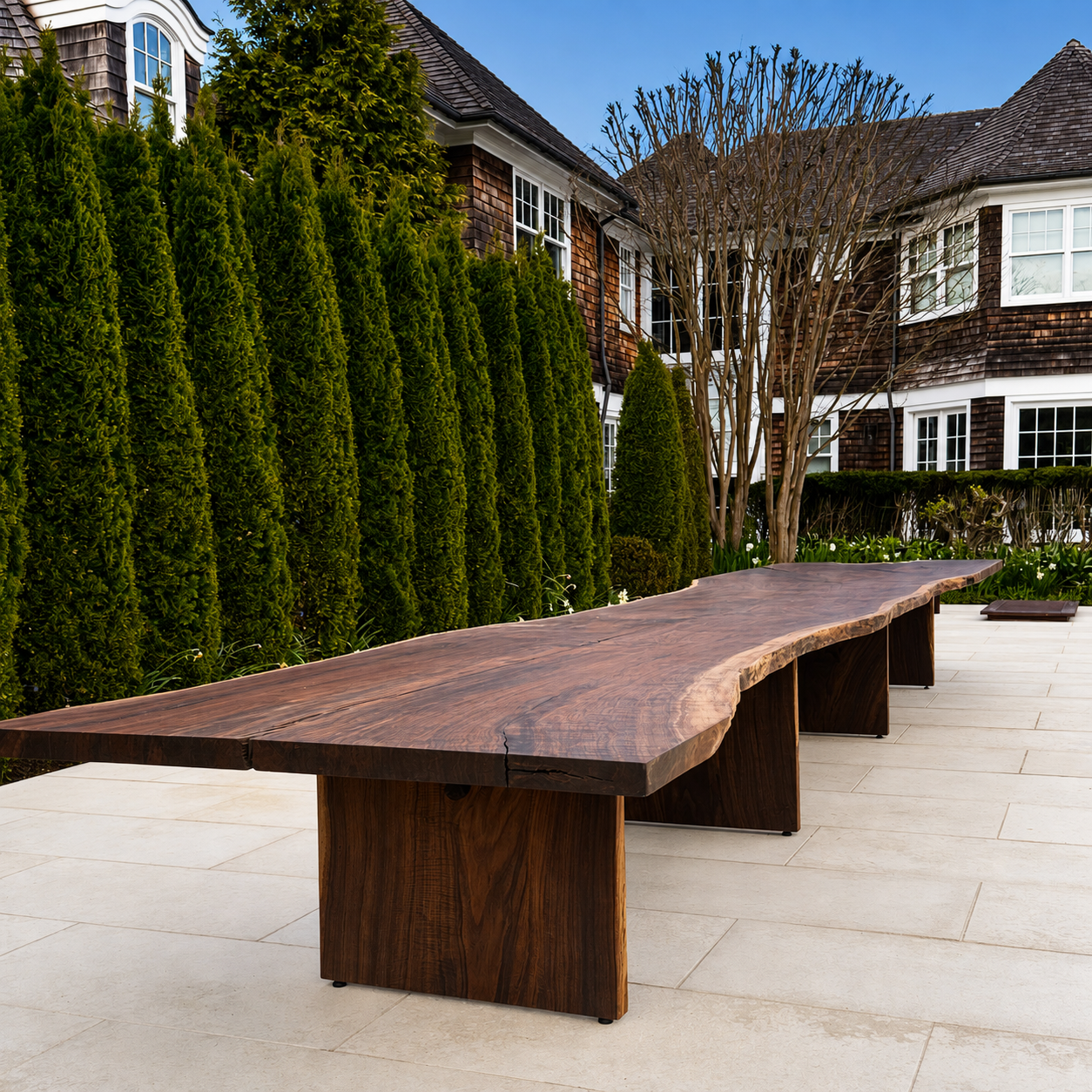
One of my most substantial projects was an approximately 25-foot Claro walnut table built for a residence in the Hamptons.
Installing a table at that scale required crane coordination.
Projects like this demonstrate why transportation and installation need to be considered during the design process—not after construction is complete.
For clients outside Southern California, I can coordinate appropriate shipping and delivery arrangements as part of the project.
Is a Single-Slab Walnut Table Worth the Investment?
For the right client, absolutely.
But the value isn't simply that the table is made from one piece of wood.
It's the combination of exceptional material, thoughtful design, skilled fabrication and the fact that the finished piece cannot be duplicated.
An extraordinary slab may have taken generations to grow.
It may then spend years being milled, dried and prepared before becoming suitable for furniture.
Once transformed into a custom table, that material can become part of a family's home for decades.
For me, that's the real appeal of exceptional solid-wood furniture.
You're not simply purchasing a table. You're commissioning a piece built around an individual tree and your specific space.
How Do You Get an Accurate Quote for a Large Live Edge Table?
The best way to establish pricing is to begin with a few important details.
I generally ask clients for the desired table length and width, seating capacity, preferred wood species, project location and any photographs or architectural plans of the space.
From there, we can evaluate available slabs and discuss the design.
For especially large projects, the availability and characteristics of the individual slab can significantly influence the final price.
I prefer to provide pricing based on the actual material and project requirements rather than an arbitrary price-per-foot formula.
That gives clients a more meaningful understanding of what they're commissioning.
Who Builds Extra-Large Custom Walnut Tables?
Kristopher Kirkpatrick Custom Furniture specializes in large and extra-large custom live edge dining and conference tables built from premium Claro walnut, Bastogne walnut and other exceptional hardwood slabs.
I work from my workshop in Valley Center, California, serving clients throughout San Diego, Orange County, Palm Springs and Los Angeles, as well as clients nationwide.
My projects range from residential dining tables to oversized commercial conference tables and extraordinary large-format commissions approaching 25 feet in length.
Whether you're looking for a substantial single-slab dining table or a massive custom conference table, the process begins with finding the right material.
Commissioning a Custom Walnut Table
If you're considering a 10-, 12-, 16-, 20-foot or larger custom live edge walnut table, I'd be happy to discuss your project.
Start by sharing the approximate dimensions, preferred wood species, seating requirements and location.
From there, I can help identify available premium slabs and develop a design around your space.
Explore my custom wood table portfolio or contact me to discuss your project.
Kristopher Kirkpatrick Custom Furniture — specializing in large custom live edge dining and conference tables handcrafted from exceptional walnut slabs in Valley Center, California, for clients throughout Southern California and nationwide.