
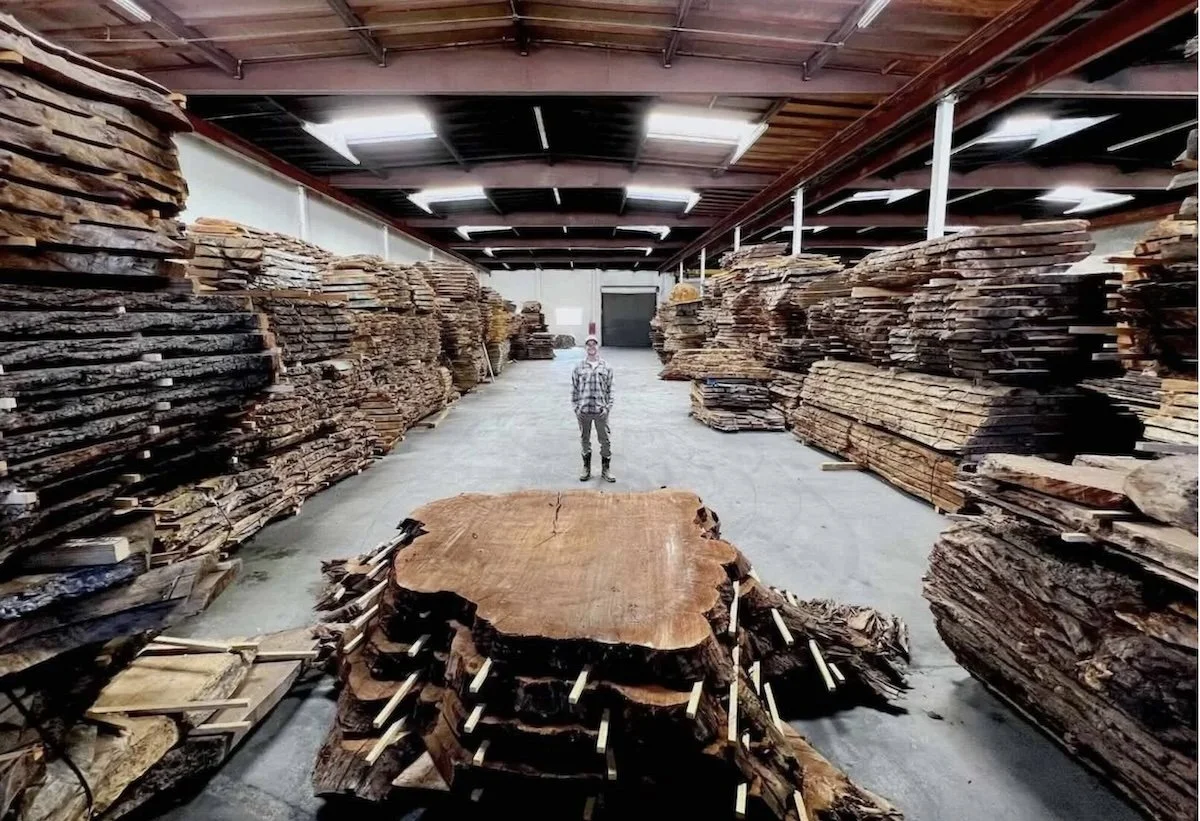
Live Edge Table Trends: White Oak, Lighter Woods & Modern Designs Live edge furniture continues to evolve.
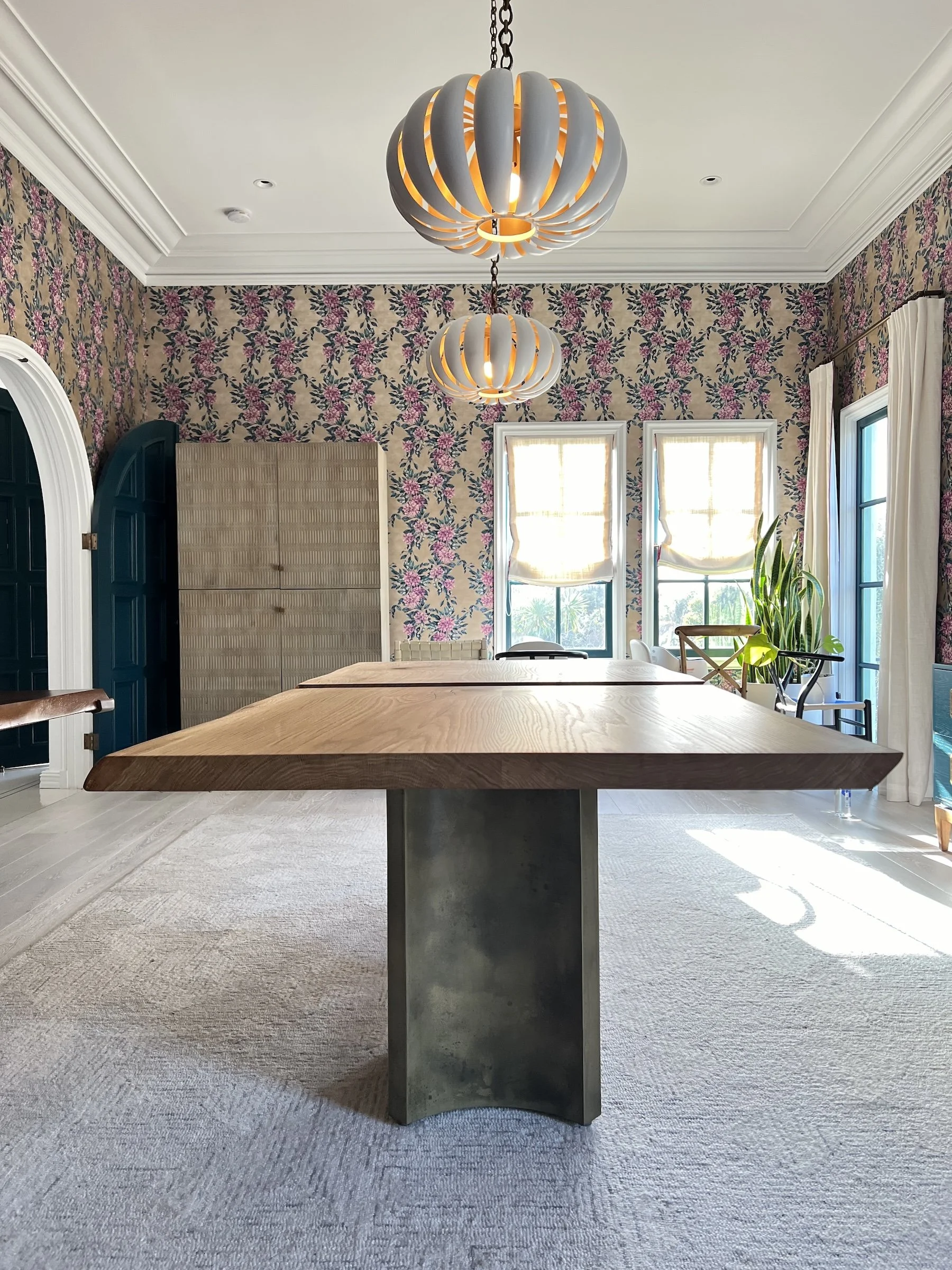
Custom white oak dining table pairing a light natural finish with a clean, architectural metal base.
While exceptional Claro and Bastogne walnut remain some of the most sought-after materials for the custom tables I build, I've also seen growing interest in white oak, lighter natural finishes and visually lighter base designs.
The result is a more contemporary interpretation of the live edge table—one that preserves the character of natural wood without making a room feel heavy or overly rustic.
For homes throughout San Diego and Southern California, this direction makes a lot of sense. Open floor plans, large windows and indoor-outdoor architecture naturally pair with furniture that feels clean, organic and visually open.
Here are some of the live edge table trends influencing the custom dining and conference tables I'm building today.
White Oak Tables: A Lighter Approach to Natural Wood
For years, walnut has been one of the defining materials in high-end custom furniture—and for good reason.
Claro walnut offers rich chocolate tones, extraordinary figure and the ability to create a table that immediately becomes the focal point of a room.
White oak offers a completely different experience.
Its natural coloring ranges from light tan to warm golden brown, with a generally straighter and more restrained grain pattern. That makes a white oak dining table particularly well suited to contemporary, coastal, Scandinavian-inspired and transitional interiors.
Instead of dominating a space, white oak can integrate quietly into it.
In Southern California homes with abundant natural light, that can be especially effective.
Why White Oak Works So Well for Dining Tables
Appearance isn't the only advantage.
White oak is also an exceptionally durable hardwood. With a Janka hardness rating of approximately 1,360 lbf, it is harder than walnut and well suited to furniture that sees regular use.
That combination of durability and understated appearance makes white oak an excellent material for:
Custom dining tables
Conference tables
Kitchen tables
Desks
Bar and counter applications
Other high-use furniture surfaces
For families looking for a lighter aesthetic without sacrificing the durability expected from a substantial solid-wood table, white oak is one of the first species I recommend considering.
Natural Finishes Are Replacing Heavy Stains
Another change I've seen is a greater appreciation for wood that actually looks like wood.
Rather than using dark stains to force one species to resemble another, many contemporary interiors allow the natural color and grain of the material to become part of the design.
I strongly prefer this approach.
If a client wants the deep chocolate tones and dramatic figure of walnut, I would rather start with an exceptional piece of walnut.
If the goal is a lighter, quieter table, white oak or figured maple may be the better material.
The species itself becomes part of the design rather than simply a surface to be colored.
For live edge furniture in particular, natural finishes allow the grain, figure and history of the tree to remain visible.
Modern Table Bases Are Becoming Visually Lighter
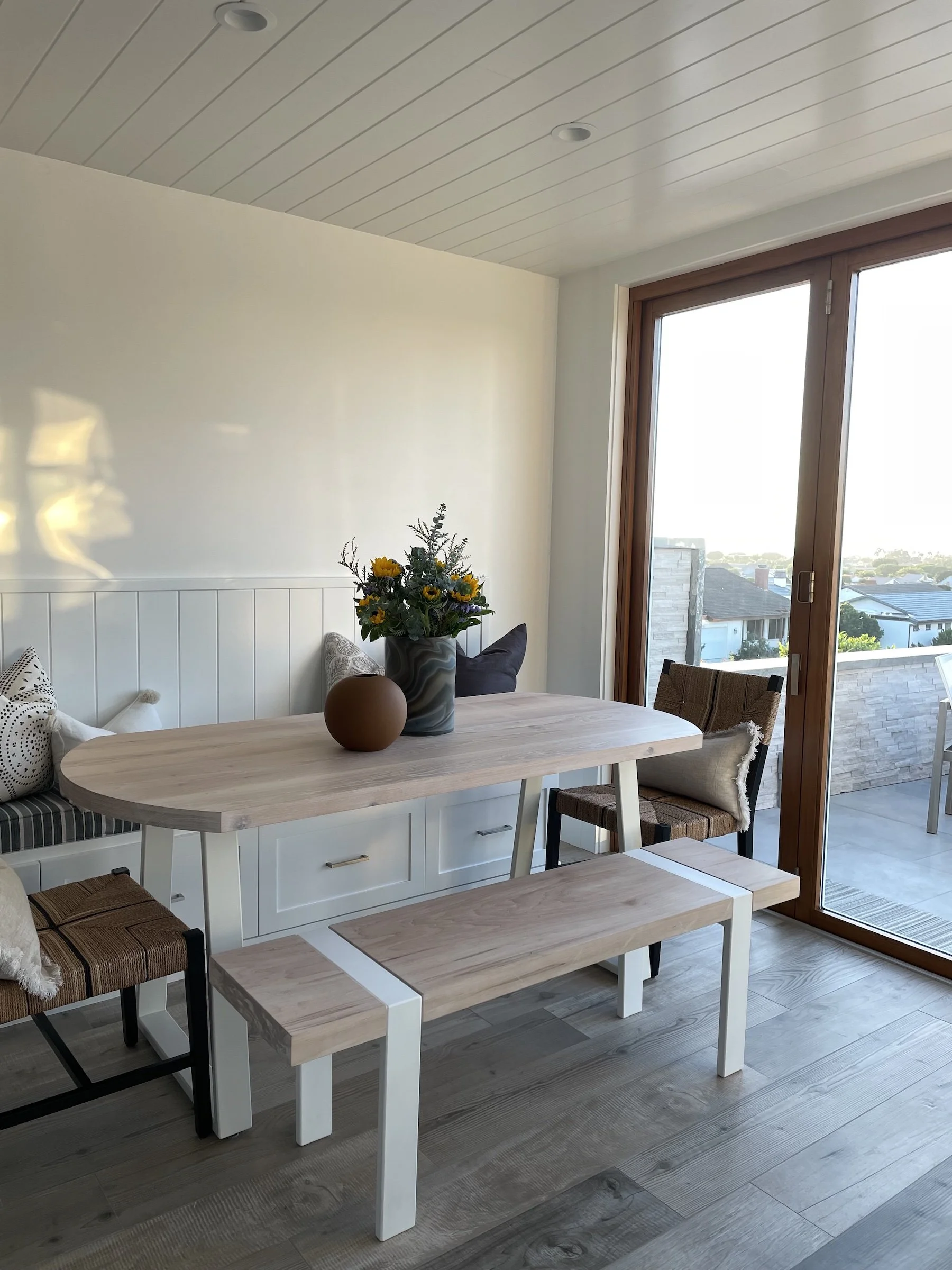
White oak paired with a minimal white metal base creates a light, relaxed look for this contemporary dining space.
The shift toward lighter furniture isn't limited to wood species.
Modern live edge tables increasingly pair substantial natural slabs with simple steel bases that create more open space beneath the tabletop.
That contrast works extremely well.
A slab may be three inches thick and weigh hundreds of pounds, yet the right base can make the finished table appear surprisingly light within the room.
Powder-coated steel is particularly versatile because the base can provide the structural support a large slab requires without competing visually with the wood.
Matte black remains an excellent choice because it creates contrast while disappearing beneath the table. Depending on the room, lighter or custom metal finishes can create an even softer appearance.
The objective is simple:
Let the wood remain the focal point.
Less Rustic, More Architectural
Live edge furniture was once strongly associated with rustic interiors.
That's no longer the case.
Some of the most interesting projects I see today place highly organic slabs inside extremely refined contemporary homes.
The contrast is what makes them work.
A natural edge introduces something imperfect and organic into a space filled with straight architectural lines. A minimal steel base keeps the piece from becoming visually rustic.
This is one reason I believe contemporary live edge tables have such staying power.
The furniture doesn't have to dictate the style of the entire room. The right slab and base can work within contemporary, transitional, coastal, industrial and even very traditional architecture.
Walnut Isn't Going Anywhere
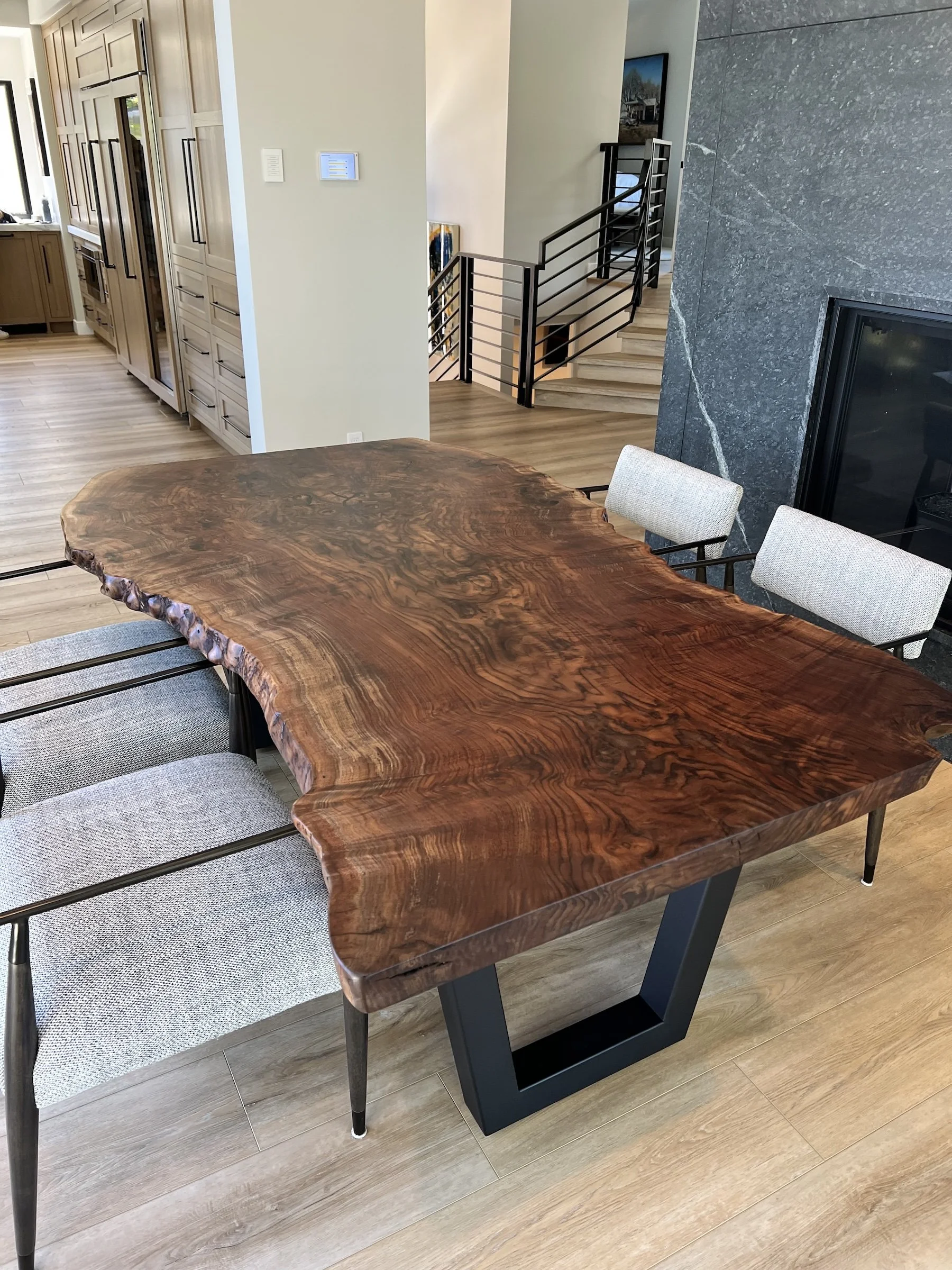
Highly figured Claro walnut creates a dramatic focal point against the lighter finishes of this contemporary kitchen.
Trends toward lighter interiors don't mean dark woods are disappearing.
Quite the opposite.
An extraordinary piece of Claro or Bastogne walnut offers something that white oak simply doesn't—and vice versa.
Highly figured walnut creates depth, movement and visual drama. In the right room, that darker material can anchor an otherwise light interior and become the defining piece in the space.
Some of my favorite installations pair a dramatic walnut table with white walls, large windows, lighter flooring and restrained furnishings.
That contrast allows the table to function almost like a piece of art.
Rather than thinking about walnut versus white oak as a question of which species is more fashionable, I prefer to ask a different question:
What role should the table play in the room?
If you want the table to quietly complement the architecture, white oak may be ideal.
If you want the table to command attention, an exceptional walnut slab may be impossible to beat.
Choosing Between White Oak and Walnut
For clients deciding between these two materials, I generally consider the overall palette of the room first.
Consider white oak when you want:
A lighter, more understated appearance
Contemporary or coastal styling
Strong durability for everyday use
A table that integrates quietly with the surrounding architecture
Warm natural wood without the visual weight of darker material
Consider Claro or Bastogne walnut when you want:
Rich chocolate and brown coloration
Dramatic grain and figure
A statement piece that anchors the room
Exceptional single-slab character
A table designed to become one of the primary visual elements in the space
Neither is inherently better.
The right material depends on the architecture, lighting, flooring, furnishings and—most importantly—the individual slab.
A Modern Live Edge Table Should Still Be Timeless
I pay attention to furniture and interior design trends, but I don't believe a custom table should be designed around a trend that may disappear in two years.
These pieces are built to last far longer than that.
The goal is to understand what's happening in contemporary design and then use those ideas selectively.
Lighter woods, natural finishes, minimal steel bases and cleaner lines can all make a live edge table feel fresh and architectural. But the underlying principles haven't changed:
Start with exceptional material. Respect the natural character of the slab. Design the base around the table and the room. Build it correctly.
Do those things well, and the finished piece shouldn't feel like a “2026 table.”
It should simply feel right.
Designing a Custom Table for Your Space
Choosing between white oak, Claro walnut, Bastogne walnut or another hardwood is only the beginning.
For each project, I consider the dimensions of the room, seating requirements, architecture, existing finishes, base design and how prominently the client wants the table to read within the space.
From there, we can select individual slabs and develop a design around the material.
If you're considering a custom live edge dining table or conference table, contact me to discuss your project and see available slabs.
Kristopher Kirkpatrick Custom Furniture — handcrafted in Valley Center, California and serving San Diego, Orange County, Palm Springs, Los Angeles and clients throughout California and nationwide.