
How We Create a Live Edge Table from Start to Finish: What Separates Quality from Catalog Furniture
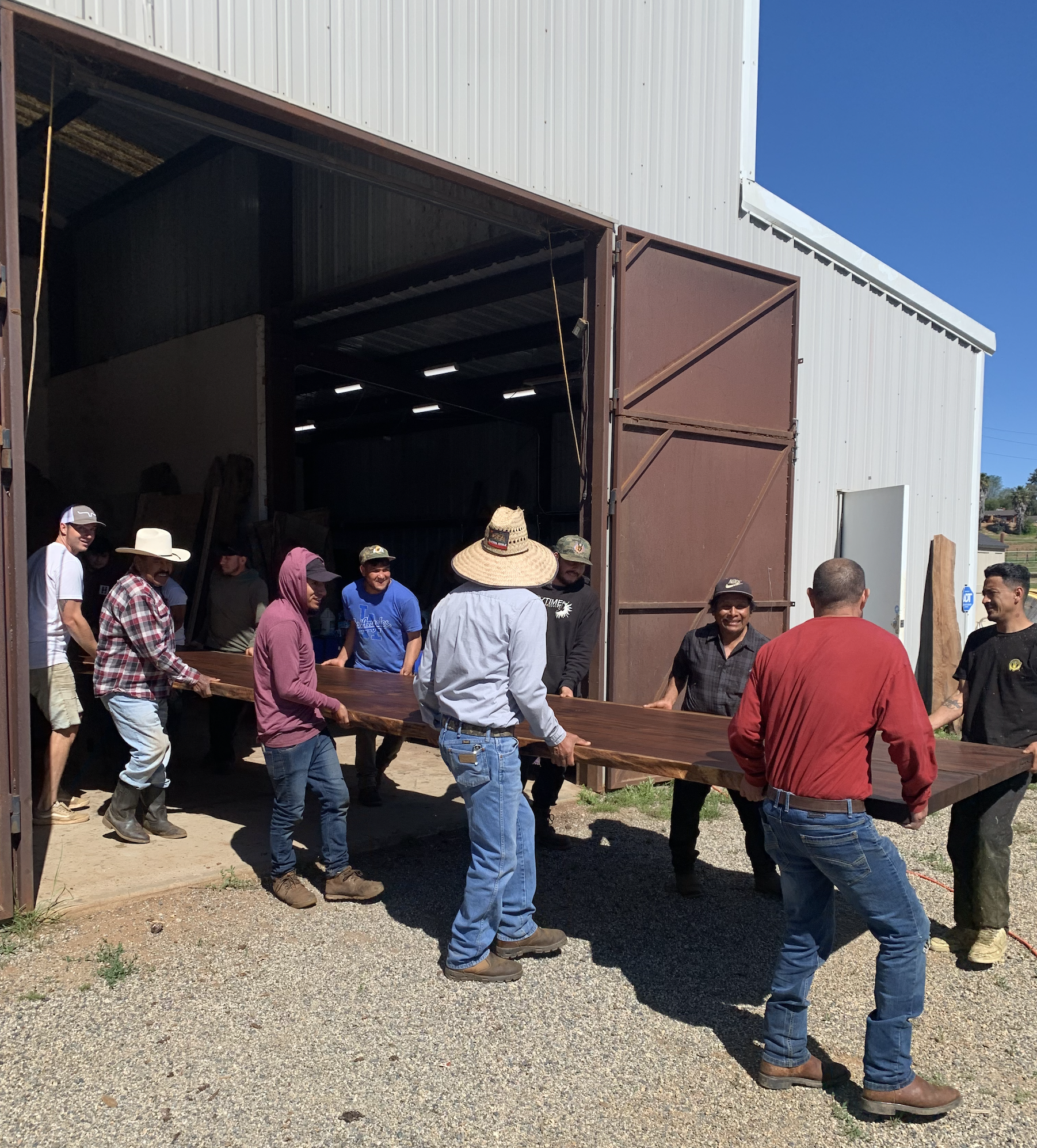
A massive walnut slab requires an entire crew to safely move during the custom table building process.
There is a significant difference between buying a mass-produced table and commissioning a custom live edge table. It isn't simply the price or the species of wood. The difference begins years before the table enters my shop and continues through slab selection, drying, stabilization, construction, finishing and final delivery.
Quality custom furniture making requires adapting the process to the individual piece of wood. No two slabs are exactly alike. Grain, moisture, figure, natural edges, cracks, voids and internal stresses all influence how a slab needs to be handled.
I've spent years building large live edge dining tables, conference tables and other one-of-a-kind pieces in my workshop in Valley Center, California. Here is a look at my live edge table process from start to finish—and what separates an heirloom-quality table from mass-produced furniture.
Step 1: Start With Exceptional Wood
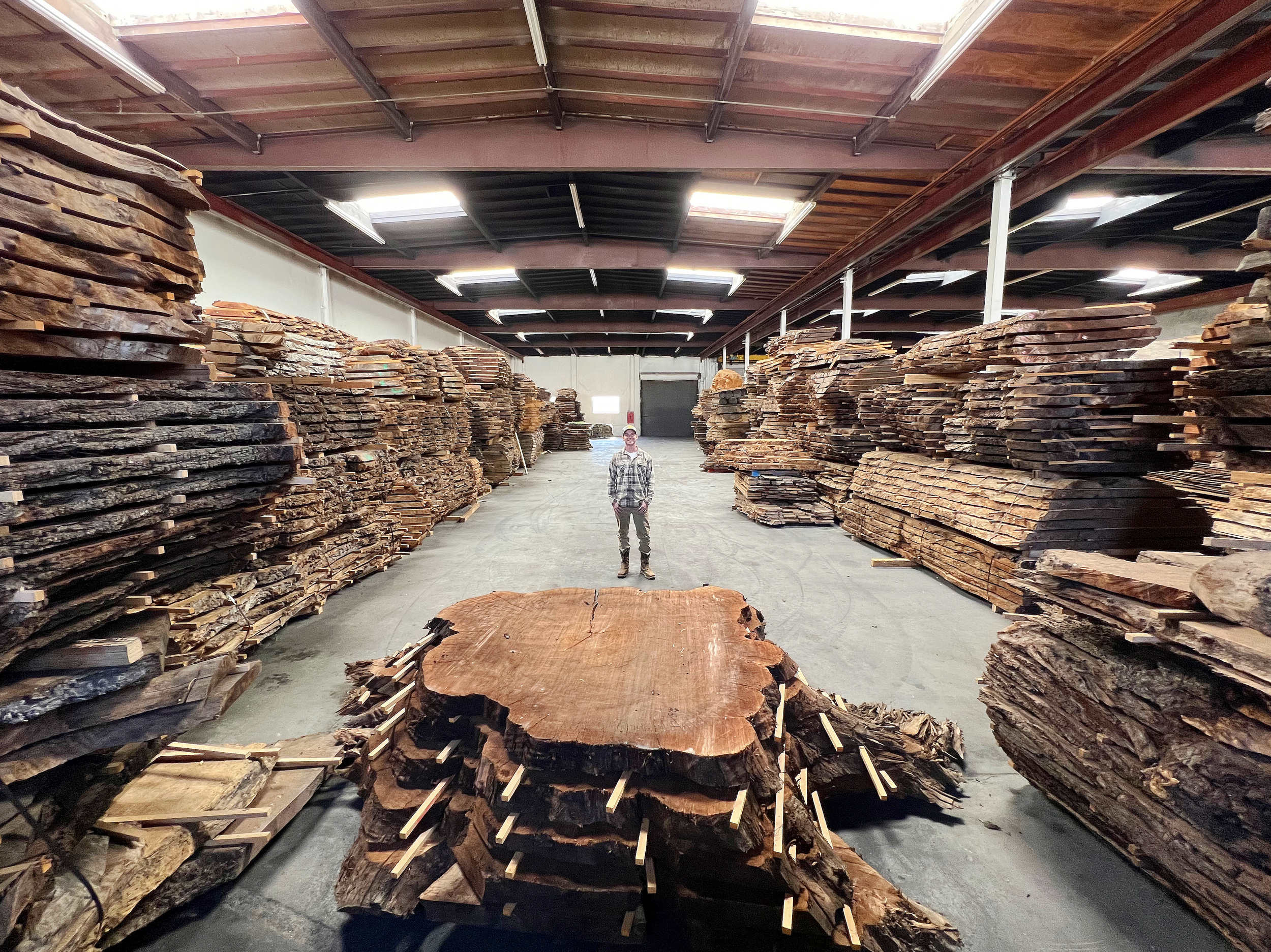
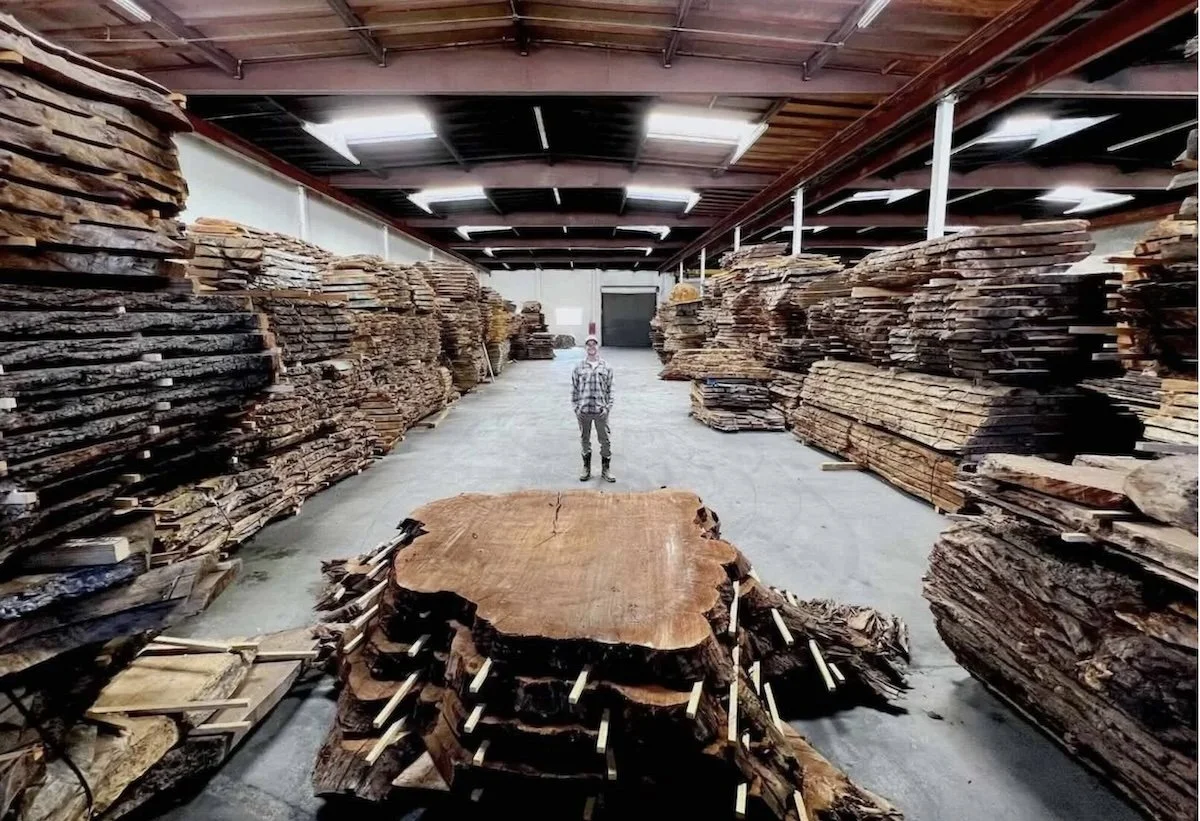
Quality custom furniture starts long before a slab reaches my workshop. Years of relationships with trusted suppliers give me access to exceptional large-format walnut slabs throughout California.
A great table begins with great material.
Before I touch a router, sander or saw, much of the table's future has already been determined by how the tree was milled, dried and stored.
I have spent years developing relationships with trusted slab suppliers throughout California and the Pacific Northwest. These relationships give me access to exceptional Claro walnut, Bastogne walnut, figured maple, redwood and other large-format hardwood slabs that simply aren't available through a typical lumberyard.
Proper drying is especially important with large slabs. After milling, slabs may spend years air-drying before kiln drying and eventually becoming suitable for furniture.
Rushing that process can create problems that don't necessarily reveal themselves immediately.
That's why wood slab selection isn't simply about finding the prettiest piece of wood. I want to know where the slab came from, how it was processed and whether it's suitable for the table we're asking it to become.
Step 2: Selecting the Right Slab for the Project
Once I understand what a client wants to build, we begin looking for the individual slab.
This is one of my favorite parts of the process.
For a custom dining table, I'm considering the finished dimensions, seating requirements, grain, figure, natural edge, color, thickness and how the slab will relate to the architecture of the room.
For a large conference table, the priorities may be different. We might need substantial width, a particular length, integrated power or a base capable of supporting an extremely heavy slab without interfering with seating.
Two slabs of the same species—even two slabs cut from the same tree—can produce completely different tables.
The goal isn't simply to select a species. It's to find the right individual piece of wood.
Step 3: Reading the Slab Before Building the Table
This is where experience becomes particularly important.
Natural slabs aren't manufactured materials. Cracks, voids, bark inclusions, movement, internal stress and areas of decay are part of working with real trees.
Nine times out of ten, there is something that needs to be addressed.
Some imperfections become beautiful features of the finished table. Others need to be stabilized or removed. Occasionally a slab needs considerably more intervention before I am comfortable building furniture from it.
The important part is recognizing those issues before they become problems.
This is also why I don't believe in applying an identical production process to every live edge table. Every slab tells you something different.
The craftsman's job is to read the material and respond accordingly.
Step 4: Surfacing, Stabilizing and Shaping
Once I've determined how the slab needs to be handled, the physical transformation begins.
The slab is surfaced and flattened, defects are addressed, structural areas are stabilized where necessary, and the final dimensions begin to emerge.
This is also when decisions about the natural edge become important.
A beautiful live edge should look natural, but that doesn't mean it is untouched. Loose bark and unstable material have to be removed while preserving the contours and character that make the slab special.
Cracks and voids may require stabilization or resin work depending on the design and the condition of the material.
From there, the table is progressively shaped and sanded until the surface, edges and underside are ready for finishing.
This portion of handmade table construction can be extremely time-consuming, but it is also where much of the refinement happens.
Step 5: Building the Base Around the Table
The base isn't an afterthought.
Whether we're using steel, wood or a completely custom design, the base has to work structurally and visually with the slab.
Large solid-wood tables can weigh hundreds of pounds, so support and attachment methods matter. At the same time, the base needs to accommodate the natural seasonal movement of solid wood rather than fighting against it.
Proportion matters too.
A base that looks great underneath an eight-foot table may look completely wrong beneath a fourteen-foot conference table.
This is why I generally design the base around the individual top rather than forcing the top onto a predetermined base.
Step 6: Finishing the Table
Finishing is where the grain and color that have been hidden throughout much of the construction process finally come alive.
For many of my tables, I use Rubio Monocoat, a hardwax oil finish that preserves the natural appearance and feel of the wood while providing protection appropriate for everyday use.
I particularly like an oil finish on exceptional walnut because it doesn't make the table look or feel like it has been encased in plastic. You can still experience the wood.
Just as importantly, an oil-finished surface can be maintained and repaired over time.
Proper preparation before applying the finish is critical. Sanding, surface preparation, application and curing all affect the final result.
The objective isn't simply to make the table look beautiful on delivery day.
I want it to be maintainable for decades.
Step 7: Inspection, Delivery and Installation
The custom table process doesn't end when the finish cures.
Large live edge tables present an entirely different delivery challenge than ordinary furniture. Some of my pieces are extremely large and heavy, and protecting them during transportation requires planning.
For local projects throughout Southern California, I can coordinate delivery and installation so the table is properly handled, positioned and assembled in the client's space.
For projects farther away, large tables may require custom crating, freight transportation and insurance.
I've shipped substantial pieces across the country, and I've learned that packaging and logistics deserve the same attention as construction. A beautiful table isn't finished until it arrives safely in its final home.
Why Custom Furniture Takes Longer
Clients sometimes ask why a handmade table takes weeks to build when furniture can be ordered online and delivered almost immediately.
The answer is that we're creating two fundamentally different products.
Mass-produced furniture is designed around repeatability. Parts are standardized so the same manufacturing process can produce thousands of nearly identical pieces.
Custom furniture making works in the opposite direction.
The design starts with a specific client, a specific space and an individual piece of wood. The construction process then adapts around those variables.
That takes more time—but it is also what makes the finished piece impossible to duplicate.
What Separates a Quality Live Edge Table?
A beautiful slab alone doesn't make a great table.
The quality comes from the entire process:
Starting with properly dried, carefully sourced material
Selecting the right individual slab for the project
Recognizing and addressing potential problems before construction
Properly surfacing and stabilizing the wood
Designing a base appropriate for the size and weight of the top
Preparing and finishing the surface correctly
Allowing solid wood to move naturally over time
Protecting the finished piece through delivery and installation
Many of those details become invisible once the table is finished.
That's exactly the point.
When they're done correctly, you shouldn't have to think about them.
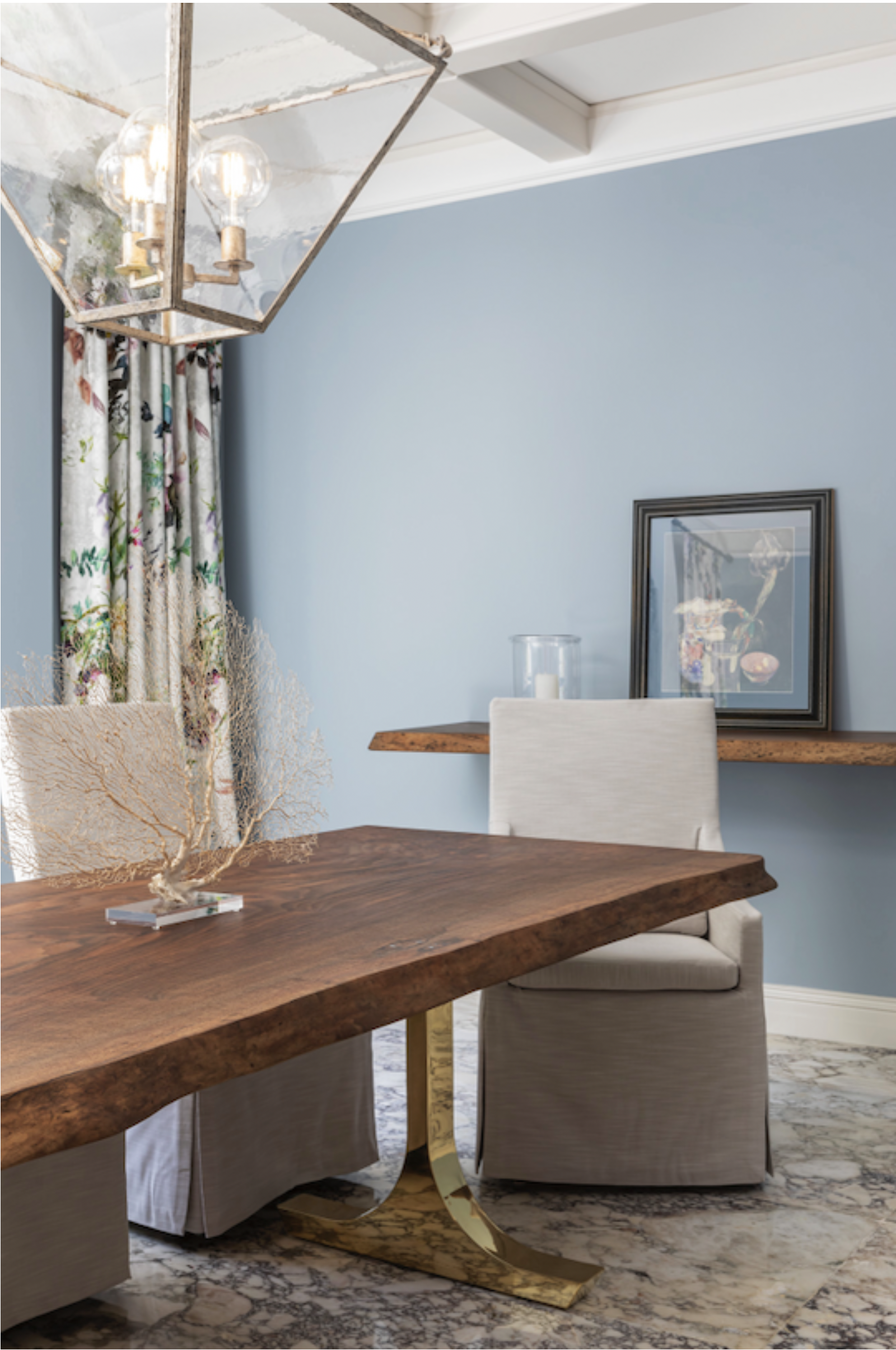
From raw slab to finished furniture—a custom walnut dining table designed and built to become a lasting part of the home.
Built to Become Part of the Home
I don't approach a custom table as something that should be replaced when styles change.
An exceptional slab may have taken a century or more to grow. In some cases, years pass between the time the tree is salvaged and the lumber is finally dry enough to become furniture.
My goal is to respect that material by building something worthy of it.
A properly designed and constructed solid-wood table can develop scratches, patina and signs of use over the years without losing what makes it beautiful. In many ways, those marks become part of its story.
That's the difference I'm trying to create with every table that leaves my Valley Center workshop: not simply another piece of furniture, but something designed to remain in the family for generations.
If you're considering a custom live edge dining table, conference table or other one-of-a-kind piece, you can explore my custom furniture portfolio or contact me to discuss your project and available slabs.
For existing owners, you can also read The Complete Guide to Caring for Your Live Edge Table for information on cleaning, maintenance and long-term care.
Kristopher Kirkpatrick Custom Furniture — handcrafted in Valley Center, California and serving San Diego, Orange County, Palm Springs, Los Angeles and clients throughout California and across the country.