
How to Plan a 14- to 20-Foot Custom Conference Table
When a conference table reaches 14, 16 or even 20 feet long, it becomes much more than a piece of office furniture.
It becomes part of the architecture.
A table of this size can define an executive boardroom, anchor a corporate headquarters and create a memorable setting for meetings with clients and colleagues.
But building an extra-large custom conference table requires careful planning. Seating capacity, room dimensions, electrical access, base design, wood selection and installation logistics all influence the final result.
I'm Kristopher Kirkpatrick, owner of Kristopher Kirkpatrick Custom Furniture, located in Valley Center, California.
I specialize in building large and extra-large custom live edge dining and conference tables from exceptional hardwood slabs, particularly premium Claro walnut and Bastogne walnut.
For businesses considering a substantial boardroom table, here's how I recommend approaching the project.
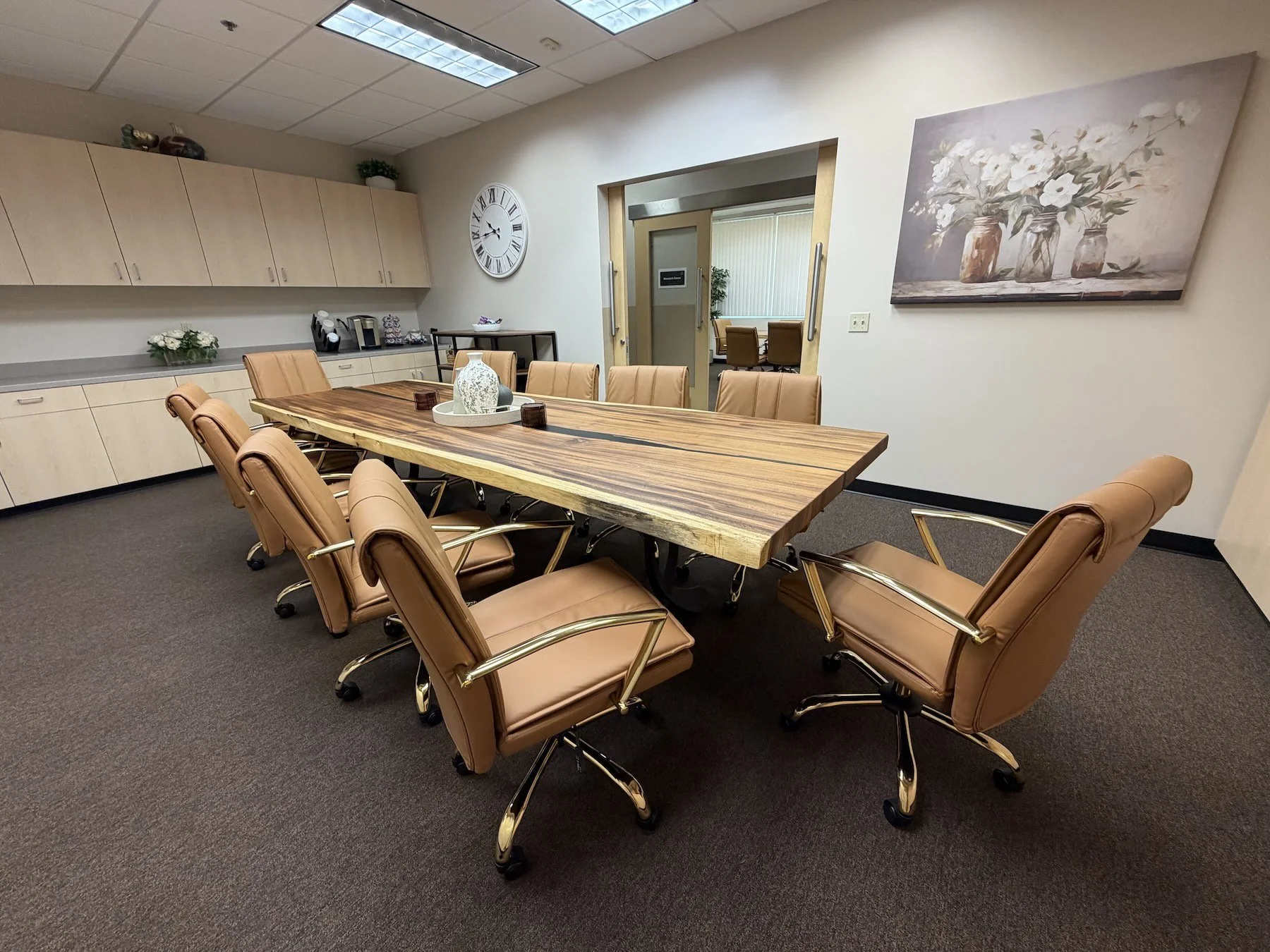
Custom Monkey Pod live edge conference table featuring rich natural grain, contrasting sapwood and a substantial solid-wood top, handcrafted for a professional boardroom.
Start With the Conference Room, Not the Table
One of the biggest advantages of commissioning custom furniture is the ability to design around the space.
A conference table should complement the architecture, accommodate the intended number of people and function comfortably during daily meetings.
Before selecting a slab, I want to understand the room itself.
Important considerations include the dimensions of the space, ceiling height, seating requirements, floor plan, existing finishes, and the placement of doors, windows and audiovisual equipment.
A beautiful 20-foot table can look extraordinary in the right boardroom.
In a room that is too small, however, it can create circulation problems and make meetings uncomfortable.
The goal isn't to build the largest table possible. It's to build the right table for the room.
What Size Conference Table Do You Need?
For large executive boardrooms, I typically begin by discussing the number of people who need to sit comfortably around the table.
A useful starting point is approximately 30 inches of seating space per person, although executive chairs, laptops and presentation materials may require more room.
Here are some general planning estimates:
Table LengthApproximate Comfortable Seating12 feet10–12 people14 feet12–14 people16 feet14–16 people20 feet18–20 people
These are guidelines rather than guaranteed capacities. The actual seating arrangement depends on tabletop width, chair dimensions, base placement and whether the ends of the table are used.
For especially substantial executive chairs, I often recommend prioritizing generous spacing rather than maximizing the number of seats.
Don't Forget Circulation Space
The table also needs sufficient clearance around it.
As an initial planning guideline, approximately 42–48 inches between the table edge and surrounding walls can provide room for chairs and circulation, depending on the layout.
Doorways, accessibility requirements, credenzas and other furniture may require additional space.
I recommend confirming these dimensions with the project's architect or interior designer before finalizing the tabletop.
Why 14- to 20-Foot Conference Tables Require Specialized Fabrication
As table dimensions increase, suitable material becomes more difficult to source and handle.
Finding an attractive eight-foot hardwood slab is one thing.
Finding a 16- or 20-foot slab with exceptional figure, adequate width, appropriate thickness and suitable structural characteristics is an entirely different challenge.
Large slabs can weigh hundreds of pounds and require specialized equipment for transportation, surfacing, stabilization and fabrication.
For premium single-slab projects, sourcing can be one of the most challenging parts of the entire commission.
I've spent years developing relationships with hardwood suppliers throughout California and the Pacific Northwest, giving me access to unusually large pieces of Claro walnut, Bastogne walnut and other premium hardwoods.
These relationships are an important part of my ability to take on projects beyond conventional furniture dimensions.
Choosing the Wood for Your Conference Table
The wood species influences the entire appearance of the room.
For large commercial projects, three of my favorite options are Claro walnut, Bastogne walnut and white oak.
Claro Walnut
Claro walnut is particularly well suited to executive boardrooms where the table is intended to make a strong visual impression.
Exceptional slabs can display deep chocolate coloration, curl, dramatic grain and extraordinary natural figure.
In a large conference room, those characteristics can become the focal point of the entire space.
Bastogne Walnut
Bastogne walnut is another remarkable material for large-format furniture.
Certain slabs display rich brown tones, dramatic grain movement and beautiful natural contrast.
When exceptional material is available, Bastogne walnut can create an extraordinary statement piece.
White Oak
For contemporary offices with lighter architectural finishes, white oak offers a completely different aesthetic.
Its natural coloration and relatively restrained grain can complement glass, concrete and minimalist interior designs.
White oak is also a durable hardwood well suited to everyday commercial use.
I don't believe one species is universally superior. The right choice depends on the individual slab and the room we're designing for.
Single-Slab vs. Multi-Slab Conference Tables
One of the first questions I ask is whether the client prefers a single-slab tabletop.
A single-slab live edge conference table preserves the continuous grain of one section of a tree.
For large boardrooms, this can create an impressive architectural statement.
However, suitable single slabs become increasingly rare at extreme dimensions.
A carefully designed multi-slab or bookmatched table can offer greater flexibility in width, grain arrangement and overall dimensions.
Both approaches can create exceptional furniture.
Rather than requiring one construction method from the beginning, I prefer to evaluate the available material and determine which approach produces the best result.
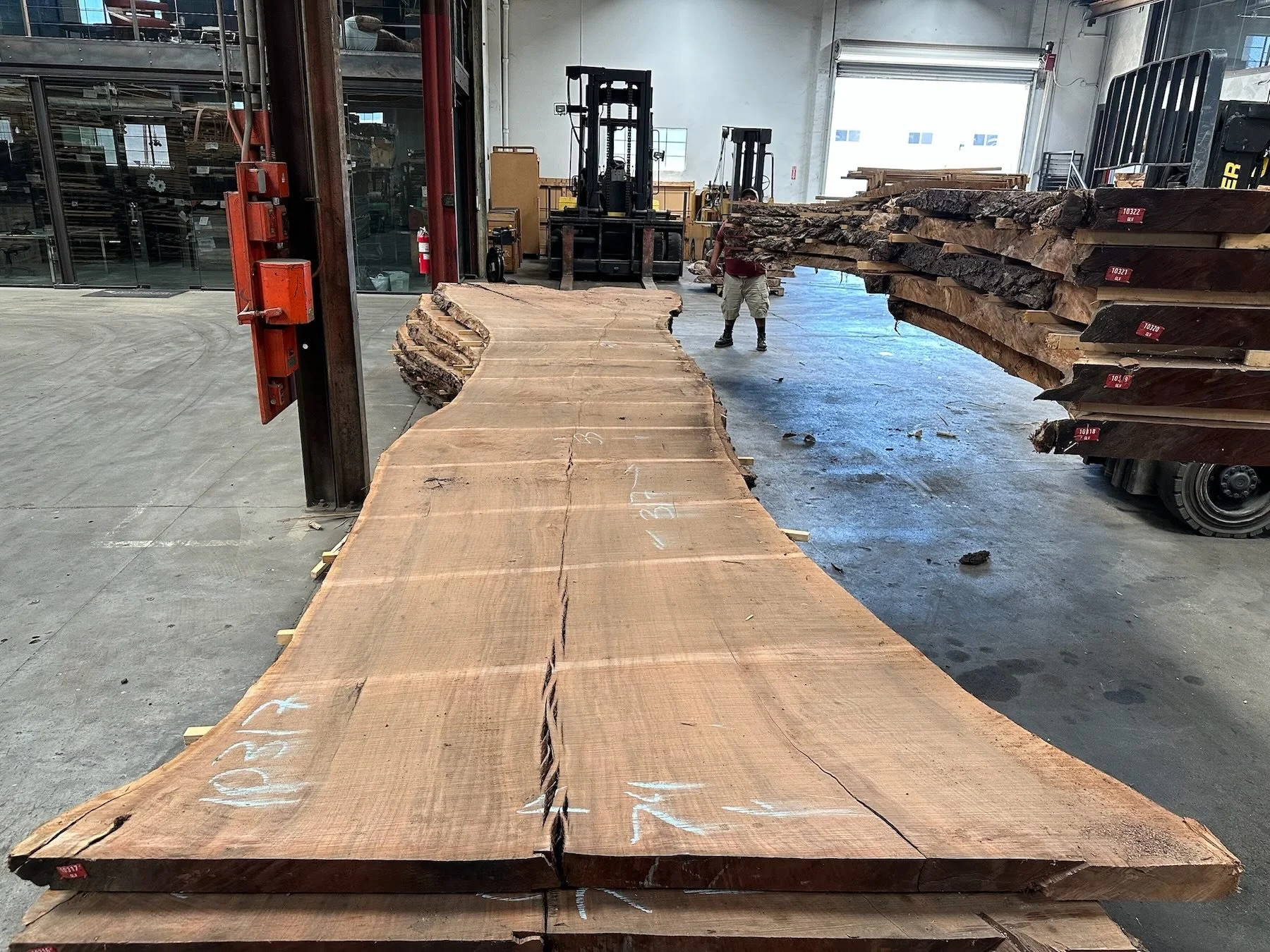
Exceptionally large Claro walnut slabs like these are the foundation of my oversized custom dining and conference tables. Sourcing material at this scale requires specialized suppliers and careful slab selection.
Engineering the Base for a Large Conference Table
A substantial conference table requires more than a visually attractive base.
The supporting structure must accommodate the tabletop's weight and span while allowing for the natural movement of solid wood.
At 14, 16 or 20 feet long, base placement becomes especially important.
Poorly positioned supports can interfere with seating, restrict legroom or create unnecessary visual clutter.
For modern commercial spaces, I often prefer custom steel bases because they can provide substantial support without competing with the natural beauty of the wood.
For other projects, a wood trestle or another custom base design may be more appropriate.
The important distinction is that the base should be designed around the individual tabletop, not selected independently of it.
Planning Power, Data and Cable Management
Modern conference rooms often require more than a beautiful tabletop.
Power outlets, charging stations, video-conferencing equipment and data connections may need to be incorporated into the finished design.
These decisions should be made before fabrication begins.
Depending on the project, the design may accommodate integrated power modules, discreet cable pathways or connections to existing floor boxes.
I prefer coordinating these requirements with the client's architect, electrician or audiovisual team early in the process.
That way, the necessary openings and access points can be incorporated into the design without compromising the natural character of the wood.
For a highly figured walnut table, the objective is to provide the required technology while keeping it as visually unobtrusive as possible.
Delivery and Installation of an Extra-Large Conference Table
A major consideration with oversized furniture is determining how it will reach its final destination.
Before fabrication begins, I consider the property's access points, door dimensions, hallways, elevators, stairs and the final installation location.
Depending on the project, large tables may require removable bases, specialized transportation, custom crating or on-site assembly.
I've built and delivered exceptionally large custom tables throughout California and across the country, including an approximately 25-foot Claro walnut table for a residence in the Hamptons.
That project required crane coordination during installation.
Although not every large conference table requires that level of planning, the underlying principle remains the same.
Delivery should be considered part of the design process from the beginning.
What Does a 14- to 20-Foot Conference Table Cost?
The cost of an extra-large custom conference table depends on several factors.
The most significant considerations include the wood species, dimensions, slab rarity, figure, tabletop construction, base design, integrated technology and delivery requirements.
An exceptional 16-foot single slab of highly figured Claro walnut is a very different investment from a more readily available multi-slab tabletop of comparable dimensions.
For that reason, I provide project-specific quotes based on the individual material and design rather than a universal price-per-foot formula.
For businesses planning an oversized commission, I recommend establishing an approximate budget early so we can focus on appropriate material options.
Who Builds Extra-Large Custom Conference Tables in California?
Kristopher Kirkpatrick Custom Furniture specializes in designing and building large and extra-large custom live edge conference tables from premium hardwood slabs.
I work from my workshop in Valley Center, California, serving businesses throughout San Diego, Orange County, Los Angeles, Palm Springs and the rest of California.
I also accept commercial commissions nationwide.
My specialty is sourcing exceptional material—particularly rare Claro and Bastogne walnut—and creating one-of-a-kind furniture at dimensions that extend well beyond conventional conference tables.
Whether the project requires a substantial 14-foot executive table, a 16-foot single-slab centerpiece or a 20-foot boardroom table, I approach each commission individually.
Commissioning a Custom Conference Table
If you're considering a large custom conference table, the best place to begin is with the room.
Send me the dimensions of the space, desired seating capacity, preferred wood species and any architectural drawings or inspiration photographs available.
If the project requires power, data or integrated audiovisual equipment, those requirements should also be discussed early.
From there, I can help identify suitable premium slabs and develop a design around the material and the architecture.
The goal is to create something that feels like it was designed specifically for the room—because it was.
Explore my custom conference table projects or contact me to discuss your boardroom and available slabs.
Kristopher Kirkpatrick Custom Furniture — specializing in extra-large custom live edge dining and conference tables handcrafted from exceptional hardwood slabs in Valley Center, California, for clients throughout Southern California and nationwide.