
Epoxy Resin Table Care: Complete Maintenance Guide
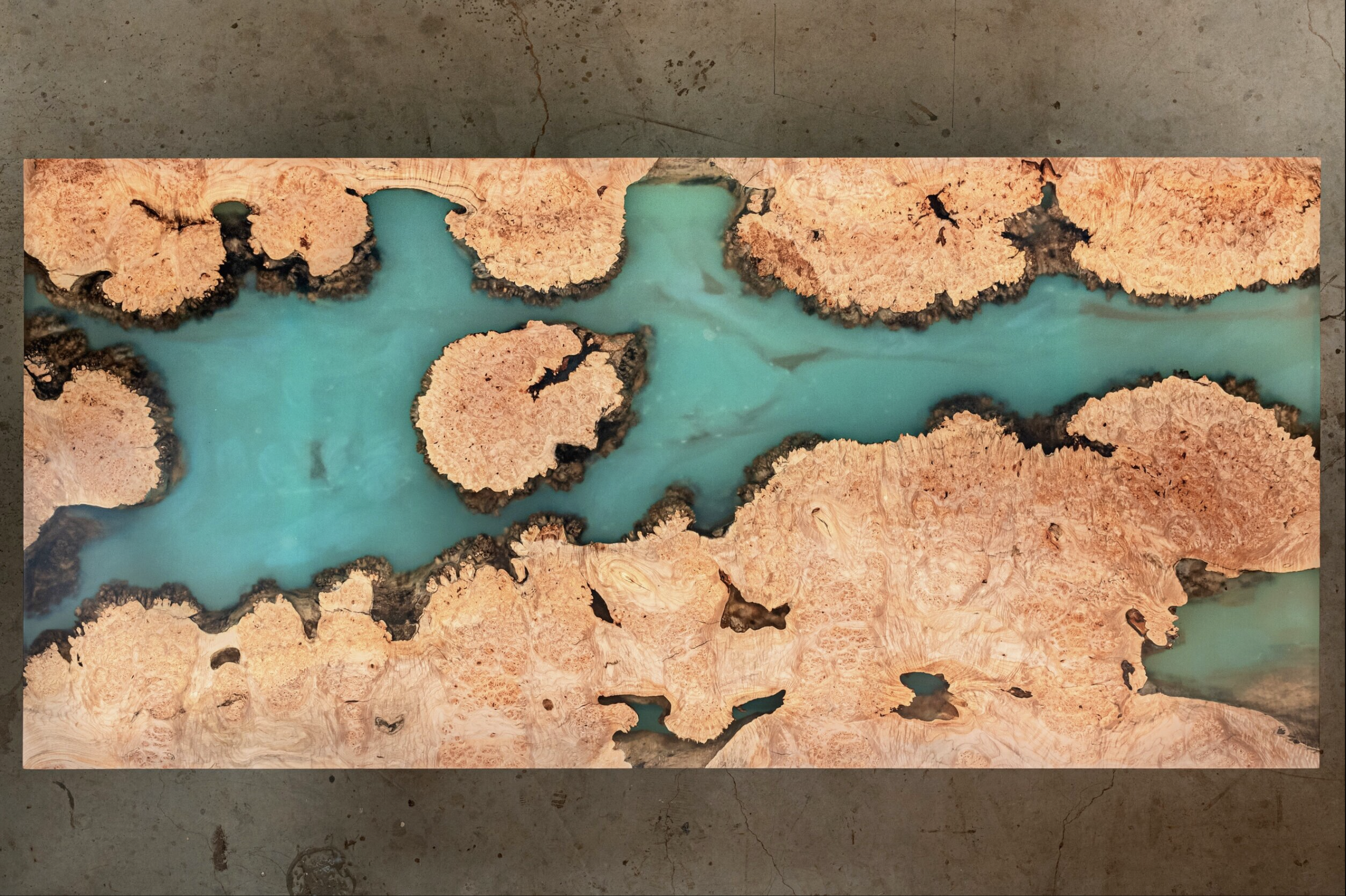
You've invested in a stunning epoxy resin table—now let's protect that investment with proper care.
The biggest misconception about epoxy table care is that resin requires completely different maintenance than wood. The truth is much simpler: epoxy river tables finished with plant-based oil are treated as a single unit, not separate materials.
Whether you own a dramatic river table with glowing resin or a live edge piece with subtle epoxy accents, the wood and epoxy sections respond to their environment the same way and need identical maintenance. As a San Diego craftsman who finishes every epoxy table with the same Rubio Monocoat oil used on wood surfaces, I'm sharing the complete resin table maintenance guide that keeps your piece stunning for generations.
From cleaning epoxy furniture correctly to understanding heat tolerance and scratch repair, here's everything you need to know.
The One-Material Mindset: Treating Epoxy and Wood as a Single Surface
Here's what most people get wrong about epoxy table care: they think resin needs special treatment.
In reality, when your table is finished with plant-based oil like Rubio Monocoat, the entire surface—wood and epoxy combined—is treated identically.
Don't think of your table as two different materials requiring separate care routines. Both sections need the same quarterly oil application, respond to temperature changes the same way, and require the same gentle cleaning approach.
This unified approach simplifies resin table maintenance dramatically. You're not switching products or techniques depending on which section you're cleaning. Your entire table follows one care schedule, uses one maintenance product, and responds predictably to San Diego's climate.
That makes epoxy river tables just as easy to maintain as solid live edge tables.
Daily Cleaning: Dos and Don'ts for Epoxy Furniture
What to Use for Cleaning Epoxy Furniture
✅ Soft, dry microfiber cloth for everyday dusting and wiping
✅ Warm water with a barely damp cloth for sticky spots or spills
✅ Rubio Monocoat Surface Care Spray Kit (or mild dish soap mixed with water for stubborn residue, followed by drying the surface completely
✅ Wipe spills immediately. Although the finish is water-resistant, prolonged moisture can eventually penetrate.
What NOT to Use (Critical for Epoxy Table Care)
❌ Windex, Pledge, 409, or other household cleaners
❌ Acetone or alcohol-based cleaners
❌ Abrasive scrub pads or scouring materials
❌ Excessive water or standing moisture
❌ Silicone furniture polishes
Most commercial cleaners are formulated for polyurethane or lacquer finishes. Those products sit on top of the wood like plastic coatings.
Your epoxy table uses a penetrating plant-based oil finish instead. Traditional cleaners strip away that natural finish, leaving both the wood and epoxy vulnerable to staining and discoloration.
For safe cleaning, stick to warm water, optional mild soap, and maintenance oil.
How to Apply Oil to Epoxy Tables
The process is exactly the same as caring for an all-wood table.
Clean the entire surface with a soft, dry cloth.
Pour a small amount of maintenance oil onto a clean cloth.
Work the oil into both the wood and epoxy using circular motions.
Allow it to absorb for approximately five minutes.
Buff thoroughly with a clean, dry cloth until no oil remains.
The finished surface should feel smooth and dry—not sticky.
For detailed instructions, see How Often Should You Apply Rubio Monocoat to Your Table.
Scratch Repair: DIY Fixes and Professional Refinishing
Minor Blemishes (DIY)
Both wood and epoxy sections can develop light scratches or dull spots over time.
Small blemishes can usually be repaired by:
Lightly sanding with 220–320 grit sandpaper
Wiping clean with a damp cloth
Allowing the surface to dry completely
Applying maintenance oil
Buffing thoroughly to blend the repair
Minor surface scratches often become much less noticeable after simply applying another coat of maintenance oil.
Significant Damage (Professional Refinishing)
Deep scratches, extensive dullness, or damage over large portions of the table are best handled through professional refinishing.
I offer on-site refinishing throughout San Diego, stripping and refinishing both the wood and epoxy together to restore the table to like-new condition.
Professional refinishing begins at $3,000, making it an excellent investment for a piece designed to last more than a century.
One of the greatest advantages of an oil-finished epoxy table is that it can be refinished an unlimited number of times. Unlike polyurethane or lacquer finishes that chip and peel, plant-based oil finishes continue improving with each refinishing.
Common Epoxy Table Care Myths Debunked
Myth: Epoxy requires specialty resin cleaners.
Truth: Most commercial resin cleaners contain chemicals that strip natural oil finishes. Warm water and mild soap are all you need (order it here).
Myth: Epoxy doesn't expand or contract like wood.
Truth: Resin reacts to temperature changes by softening in heat and shrinking in colder temperatures. Like wood, it benefits from climate control.
Myth: You shouldn't oil the epoxy portions.
Truth: When finished with plant-based oil, the epoxy accepts and benefits from oil exactly like the wood. Treat the entire surface as one.
Myth: Any scratch in epoxy requires professional repair.
Truth: Minor scratches can often be spot-sanded and resealed using the same process as wood.
Protecting Your Investment for Generations
Proper epoxy table care isn't complicated.
Treat the table as one unified surface with one maintenance routine.
Spending approximately fifteen minutes every few months applying maintenance oil helps prevent repairs that can cost thousands of dollars later.
Your epoxy river table is functional art designed to last well over 100 years with proper care.
For complete guidance on protecting your furniture from temperature swings, direct sunlight, and standing moisture, read The Complete Guide to Caring for Your Live Edge Table.
If you have questions about your specific table or are interested in professional refinishing, feel free to contact me. I'm always happy to discuss your piece and provide personalized recommendations.
Pro Tip: If you're planning to build your own epoxy river table, check out SuperClear Epoxy and use the code Kristopher5 to save an additional 5% on their epoxy resin systems.