
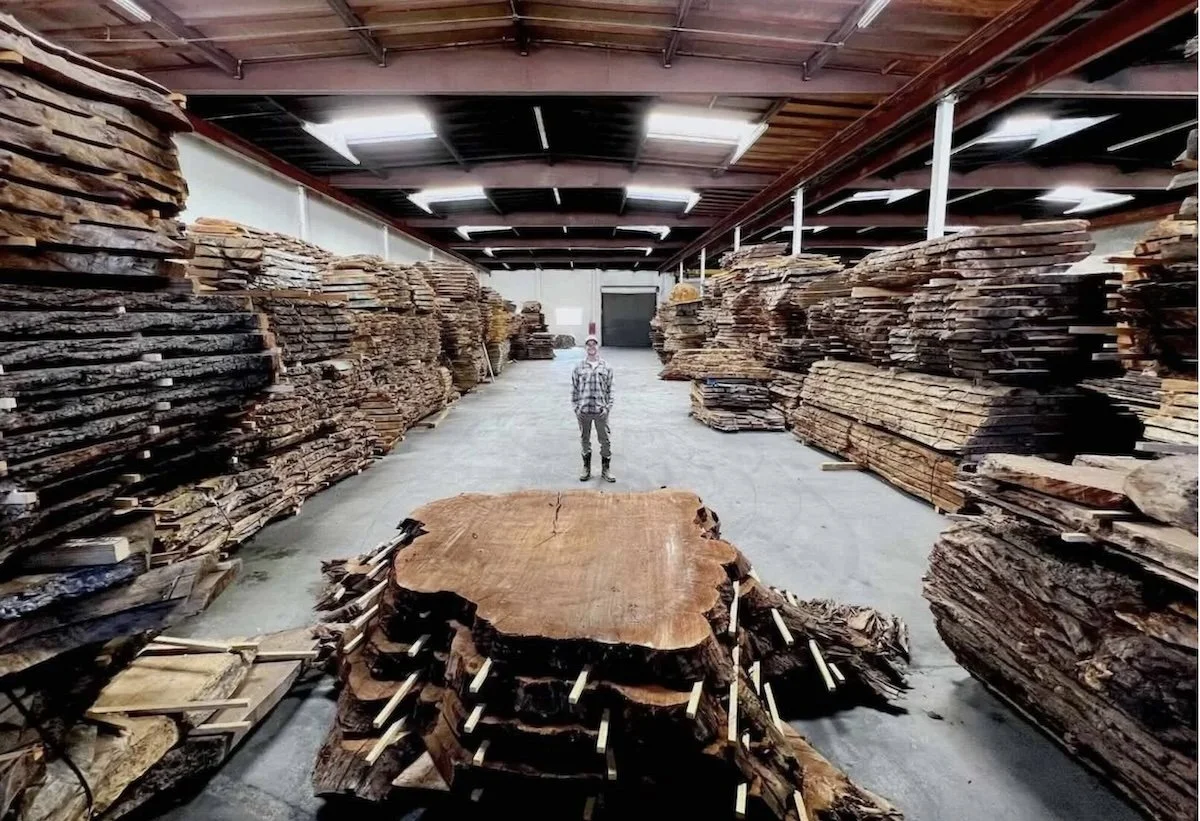
Choosing the Right Wood Species for Your Custom Table
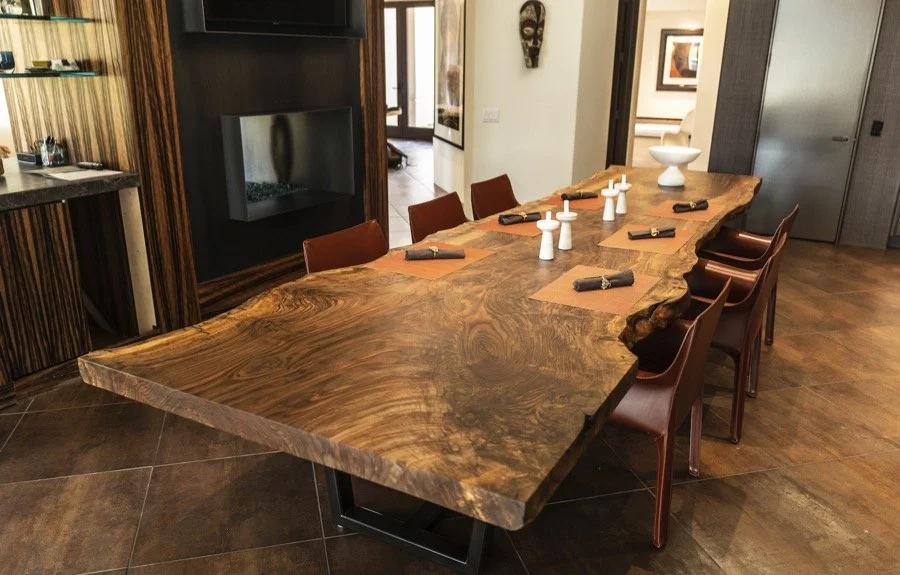
Custom Live Edge Walnut Dining Table in San Diego.
The most important decision in creating your custom table isn't necessarily the size or base design—it's the wood itself.
The species you choose influences the appearance of the finished table, how it will withstand daily use, how it ages over time, and ultimately, the character it brings to your space.
As a San Diego furniture maker specializing in custom live edge tables, I work with exceptional hardwoods including Claro walnut, figured maple, California redwood, and white oak. Choosing the best wood for a dining table usually comes down to three things: aesthetics, durability, and budget.
Here is how some of my favorite wood species compare.
Understanding the Three Deciding Factors
Cost, Durability & Aesthetics
Every wood species offers something different. When helping a client select material for a custom table, I generally consider three factors.
Cost: Large, furniture-grade slabs vary considerably in price. Species, size, figure, rarity, provenance, and overall quality all influence the cost of the raw material.
Durability: Wood hardness is commonly measured using the Janka hardness scale. Harder woods generally offer greater resistance to dents and everyday wear, although hardness is only one factor in how a finished table performs.
Aesthetics: This is often the deciding factor. Color, grain, figure, natural edge and the individual character of a slab can completely change the personality of a finished table.
For a custom piece, I believe the right slab should accomplish more than simply meet the specifications. It should be the material you want to live with for decades.
Comparing Wood Species for Custom Tables
Claro Walnut: The Premium Standard
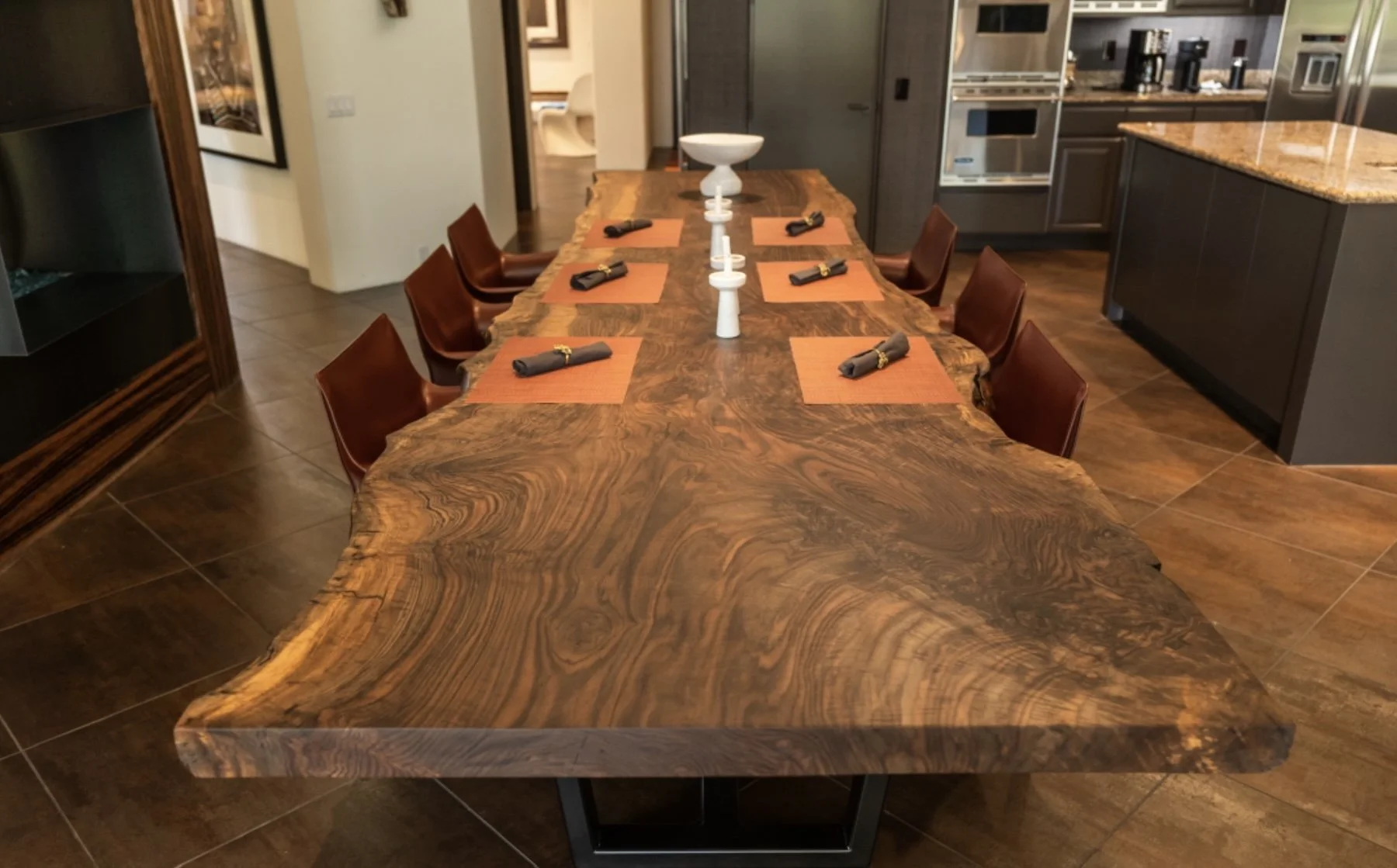
Custom Claro walnut live edge dining table showcasing the rich color and dramatic natural figure of the wood.
Claro walnut is the material I am best known for working with and remains one of my favorite woods for large custom dining and conference tables.
Aesthetics: Claro walnut can range from warm brown to deep chocolate tones, often with dramatic grain, curl, figure and contrasting sapwood. Exceptional slabs have a depth and movement that is difficult to replicate with more commonly available hardwoods.
Janka Hardness: approximately 1,010 lbf
Walnut provides an excellent balance for furniture. It is durable enough for everyday dining and conference-table use while remaining highly workable for detailed furniture making and finishing.
Why choose Claro walnut?
Rich, sophisticated natural color
Exceptional grain and figure
Excellent durability for residential and commercial furniture
Extraordinary large slabs can create true one-of-a-kind tables
Beautifully suited to both contemporary and traditional interiors
California-grown material with a unique regional history
For clients looking for a statement piece, an exceptional single slab of Claro walnut is difficult to beat.
Figured Maple: A Lighter Alternative
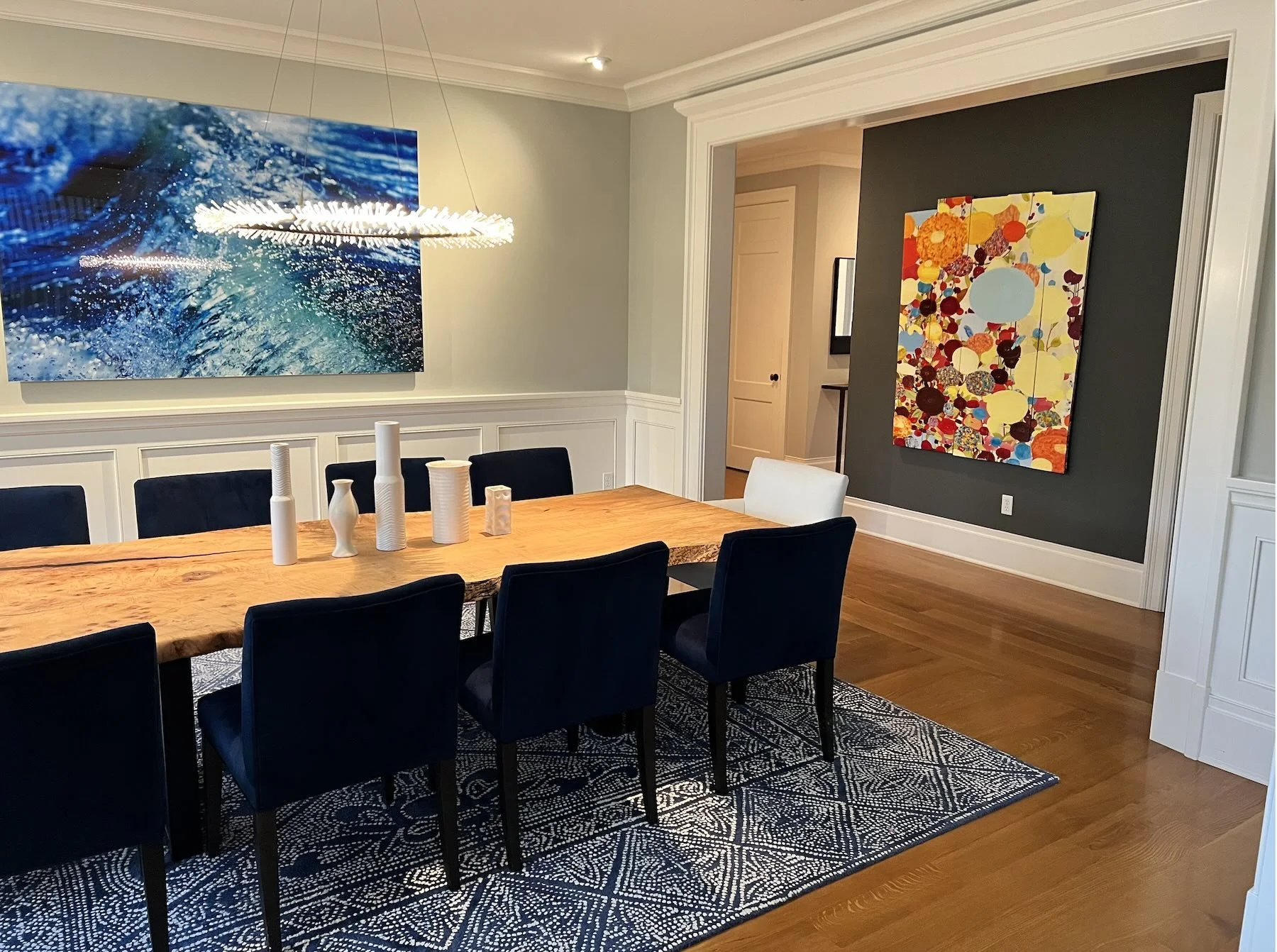
Figured maple offers a lighter palette while retaining the natural character of a one-of-a-kind slab.
For clients who prefer a lighter palette, figured maple offers a completely different aesthetic.
Aesthetics: Maple ranges from cream to light tan. Highly figured material can display curl, quilting and other patterns that create remarkable movement across the surface.
Its lighter appearance works particularly well in contemporary, Scandinavian-inspired and coastal interiors.
Janka Hardness: approximately 1,450 lbf for hard maple
Maple is harder than walnut and provides excellent resistance to dents and everyday wear.
Why choose maple?
Excellent hardness and durability
Light color can brighten an interior
Figured slabs offer extraordinary visual character
Pairs beautifully with contemporary architecture and design
For someone who loves natural wood but doesn't want the darker appearance of walnut, figured maple can be an excellent choice.
California Redwood: The Heritage Choice
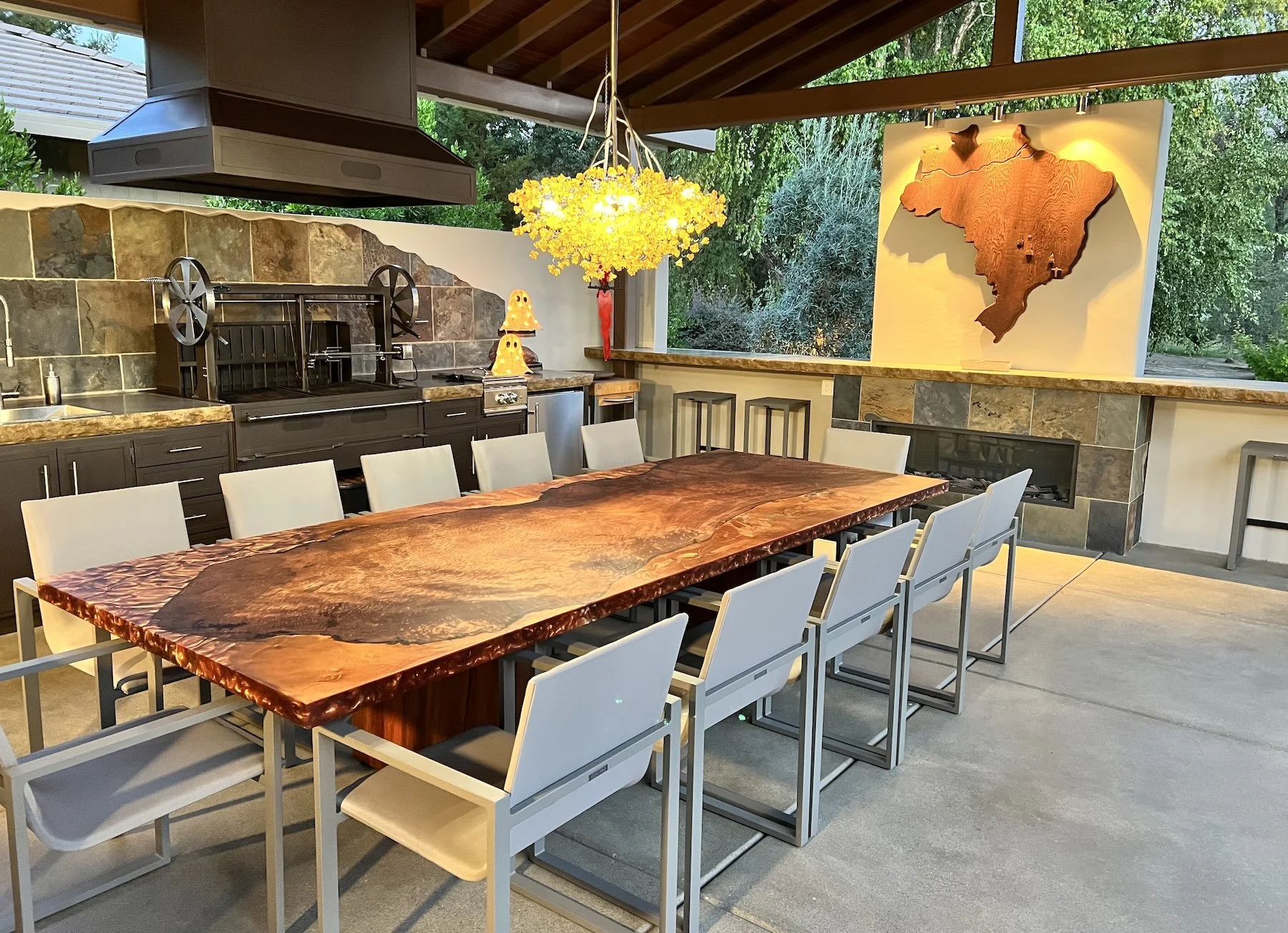
California redwood brings warm color, dramatic grain and a distinctly West Coast character to a custom table.
California redwood has an unmistakable appearance and a particularly strong connection to the West Coast.
Aesthetics: Redwood typically ranges from warm reddish brown to deeper burgundy tones, often with long, flowing grain patterns.
Janka Hardness: approximately 450 lbf
Redwood is substantially softer than walnut, maple or white oak. As a result, it is more susceptible to dents and surface damage and requires more careful use.
That doesn't necessarily make it the wrong material. For the right project, a beautiful old-growth or salvaged redwood slab can have incredible character.
Why choose redwood?
Distinctive California character
Beautiful warm color
Dramatic slabs can make exceptional statement pieces
Particularly appropriate when the history or provenance of the wood is important to the project
Redwood is best suited to clients who value its appearance and story and understand that it will develop character differently than a harder hardwood.
Walnut vs. White Oak
This is a comparison that comes up frequently.
White oak has a Janka hardness of approximately 1,360 lbf, making it harder than walnut. It generally has a lighter tan-to-brown color and a more prominent grain pattern.
Both species can make exceptional custom tables.
White oak works beautifully in interiors that call for a lighter, more understated palette. It is durable, timeless and particularly well suited to contemporary architecture.
Claro walnut offers something different. Its darker coloration, dramatic figure and availability in extraordinary single slabs can create a much more visually dominant piece of furniture.
For me, the decision between walnut vs. oak isn't about which wood is objectively better. It's about the table we're trying to create.
If the goal is a light, refined table that integrates quietly into the architecture, white oak may be the right choice.
If the table itself is intended to become one of the defining elements of the room, I often begin the search with Claro walnut.
How to Choose the Best Wood for Your Table
Rather than selecting a species from a catalog, I prefer to start with the project.
Consider how the table will be used, the architecture surrounding it, the dimensions required and the visual impact you want the finished piece to have.
For maximum durability: Hard maple and white oak are excellent choices.
For rich color and dramatic natural character: Claro walnut is difficult to surpass.
For a lighter contemporary aesthetic: White oak or figured maple may be ideal.
For California heritage and distinctive warm color: Redwood deserves consideration.
And for clients looking for something truly exceptional, species is only the beginning.
Two walnut trees can produce dramatically different slabs. Size, age, figure, grain, natural edge, color and the history of the tree all contribute to the finished piece.
That's why selecting the individual slab is every bit as important as selecting the species.
Choosing Your Investment
A custom table should be designed around both your space and the way you intend to use it.
For many of my projects, Claro walnut offers an exceptional combination of beauty, durability and rarity. But white oak, figured maple and California redwood each have qualities that can make them the right choice for a particular project.
My job isn't simply to sell you a particular species. It's to help find the right material for the table you want to create.
If you're considering a custom dining table, conference table or other large-scale piece, you can view my Claro walnut tables, explore available pieces, or contact me for a custom project.
I work directly with clients to select the material, dimensions, base and finish for each table.
Proudly serving San Diego, Palm Springs, Orange County, Los Angeles and clients throughout California and beyond.